Every June, South Florida does the same dance: watch the tropics, fill the gas tank, buy the water. The AC rarely makes the list, right up until the power comes back on after a storm and the house will not cool. The good news is that protecting your system takes about fifteen minutes, and it comes down to guarding against the two things that actually damage an AC in a hurricane: power surges and floodwater.
Here is the calm version, no scare tactics, just what is worth doing.
Before the storm
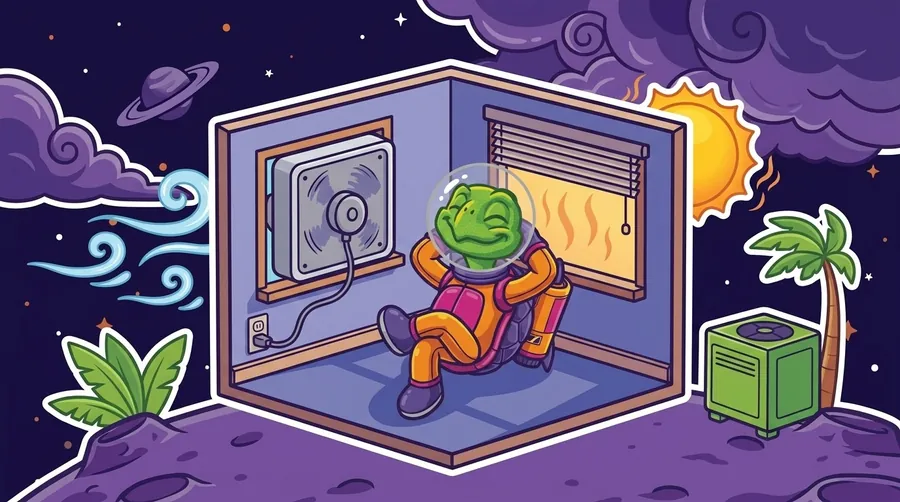
Pre-cool the house, then plan to shut the system off. Run the AC a little cooler than usual in the hours before the weather arrives, so the house starts cold. Then, when the storm is close or the power starts flickering, turn the system off at the thermostat and at the breaker. This is the single most important step, and the next section explains why.
The reason: surges are what kill compressors. When the grid goes down and comes back, it rarely returns cleanly. It flickers, surges, and browns out, and those swings are brutal on the electrical parts of an AC, especially the compressor. A system left running through that is a system rolling the dice. Shutting it off at the breaker takes it out of harm’s way entirely. A whole-home or dedicated surge protector adds another layer, and is worth asking about if you do not have one.
Clear the area around the outdoor unit. Anything loose within a few feet of the condenser, like potted plants, patio furniture, tools, garbage cans, or stray branches, becomes a projectile in high wind and can dent the coil or fan. Move it, bring it inside, or secure it. You generally do not need to cover or wrap the unit; these systems are built to sit outside, and a cover can trap moisture. Manufacturers rate them to take the weather.
Take a few photos. A quick set of pictures of your unit and the area around it, before the storm, is worth having if you ever need to show an insurance adjuster what “before” looked like.
After the storm
Do not rush to turn it back on. Once power is restored and stable, you can bring the system back, but only after a quick look. Give the grid a little time to settle rather than flipping everything on the instant the lights return.
If the outdoor unit sat in floodwater, stop. This is the one hard rule. If water rose up into or over the condenser, do not power it on. Floodwater carries grit and salt into the electrical and mechanical guts of the unit, and running it can turn a cleanable problem into a destroyed compressor. Leave it off and have it inspected first.
Clear any debris, check that the fan spins freely, and look for obvious damage, bent fins, a shifted unit, or branches lodged in the coil. Then set the thermostat a few degrees below room temperature and listen. If it starts, cools, and sounds normal, you are back in business.
When to call: if it will not start, blows warm, makes a new noise, trips the breaker, or you have any doubt after flooding, that is a call, not a gamble. After a storm the whole county is hot at once, so the sooner you flag it, the sooner we can get to you.
We are here when the power comes back
After a storm is exactly when a real person answering the phone matters. We answer 24/7, seven days a week, including the messy days after a hurricane when a lot of “24/7” competitors quietly roll to voicemail. We are locally owned, our trucks are here in Palm Beach County and the Treasure Coast, and if your system took a hit, we would rather get you cool fast than leave you sweating on hold.
Prep before the storm, respect the floodwater rule after it, and keep our number handy. If your AC will not come back to life once the power does, book a visit online or call (561) 640-1000, and we will get someone out.