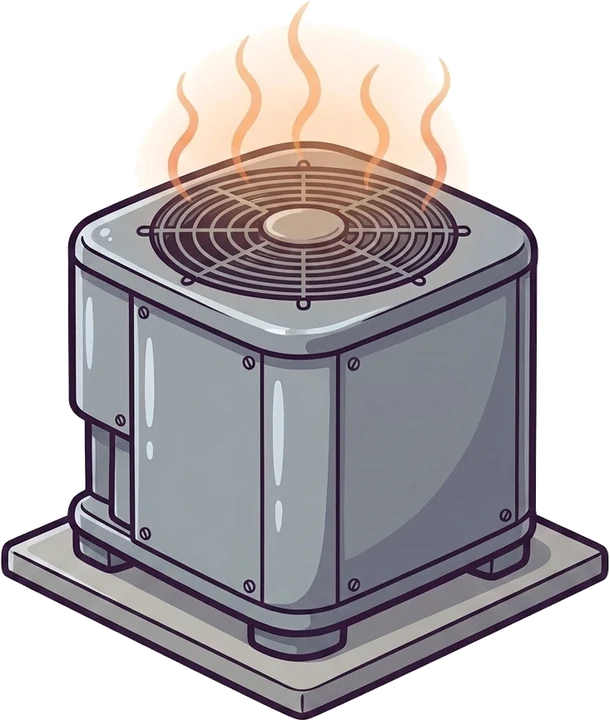
The outdoor unit, technically the condensing unit, is the workhorse half of a split system. Inside its cabinet live the compressor that pumps refrigerant, the condenser coil that releases your home’s heat, the fan that pulls air across that coil, and the electrical components that start and run it all: the contactor and capacitor. When people picture “the AC,” this gray box is usually what they mean.
Why outdoor units matter in South Florida
This machine works outside, in the sun, through the wettest and saltiest air in the country, nearly all year. Coastal corrosion eats coil fins and cabinet steel. Landscaping creeps in and blocks airflow. Hurricane season adds flying debris and power surges to the list. An outdoor unit here simply lives a harder life than the same unit anywhere else, which shows up in shorter component lifespans and makes the annual once-over more valuable, not less.
Signs of an outdoor unit problem
- The indoor fan runs but the outdoor unit is silent.
- Humming, clicking, or a fan that will not spin.
- Screeching, grinding, or banging from the cabinet.
- The unit runs but the air inside never gets cold.
What homeowners can safely do
Keep two feet of clearance around the unit, rinse the fins gently with a garden hose, and keep sprinklers from spraying it. That is the safe list. Inside the panel are capacitors that hold a charge even with power off and enough current to injure, so everything past the cabinet is licensed-tech territory. Our diagnosis tests each component in sequence, because a silent outdoor unit is a symptom with at least five different causes at five very different prices.