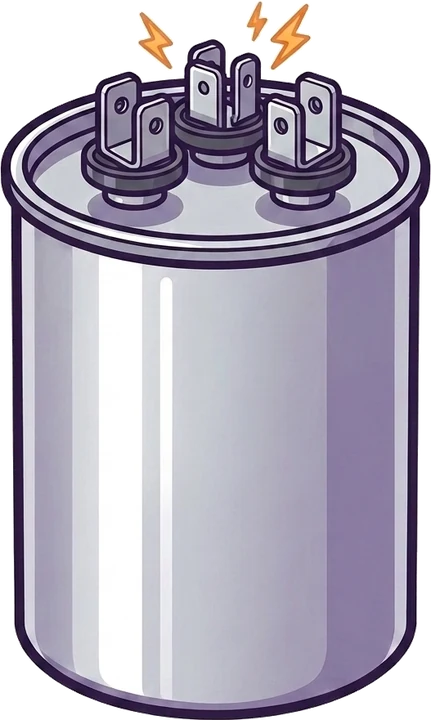
A capacitor is a small cylindrical component that stores electrical energy and releases it in a quick burst. Your AC uses that burst to start its motors, and a steadier feed from the same part to keep them running smoothly. Most residential systems in South Florida use a dual capacitor in the outdoor unit that serves both the compressor and the condenser fan motor.
Why capacitors matter in South Florida
Capacitors are rated for heat, and heat is the one thing Palm Beach County has in surplus. An outdoor unit baking in direct sun works its capacitor hard from May through October, which is why a part rated to last a decade often gives out in five to seven years here. Long run times during the peak of summer add electrical stress on top of the thermal stress.
Signs a capacitor is failing
A weak or failed capacitor is one of the most common AC repairs there is. Watch for:
- The outdoor unit hums but the fan does not spin, or the fan needs a push to get going.
- The system tries to start, clicks, and gives up.
- The AC runs but trips the breaker when it tries to restart.
- Cooling that cuts out on the hottest afternoons, then works again in the evening.
A swollen or bulging top on the capacitor itself is a classic visual giveaway, but you should not open the unit to look. Capacitors hold a charge even when power is off.
What Kyzar checks
A failing capacitor can look identical to a failing compressor from the outside, and one is a modest repair while the other is a major one. Our techs test the capacitor’s actual microfarad reading against its rating before condemning anything else, so you never pay for a big part when a small one was the problem.