
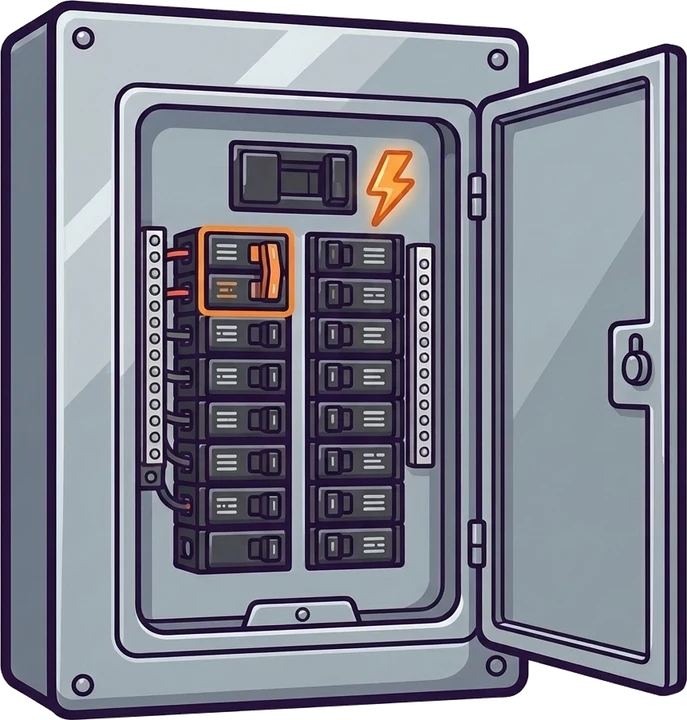
A breaker is a safety device in your electrical panel that watches the current flowing to a circuit. When the draw climbs past what the wiring can safely carry, or a fault dumps current where it should not go, the breaker trips and cuts the power. Your AC usually has two: one for the outdoor unit and one for the air handler.
Resetting once is fine. Resetting twice is a message.
If a summer storm or a brief power flicker trips the AC breaker, resetting it once is reasonable. But a breaker that trips again is doing its job: it is telling you something downstream is pulling dangerous amounts of current. Common culprits include a compressor struggling to start, a failing capacitor, a seized fan motor, or damaged wiring. Holding or repeatedly resetting a tripping breaker turns an electrical warning into a fire risk.
Why this comes up so much in South Florida
Summer afternoons are the perfect storm: the grid sags, lightning is frequent, and your AC is working its hardest. Hard restarts after outages are especially rough, because the compressor tries to start against pressure. If your breaker trips every time the power blips, the equipment is telling you its starting components are getting tired.
What Kyzar checks
A tripping breaker is a symptom, not a diagnosis. Our techs measure the actual amp draw of the compressor and motors, test the capacitor, and inspect the wiring and connections before deciding anything. The fix is often a modest electrical component, but only real testing can separate that from a compressor on its way out.