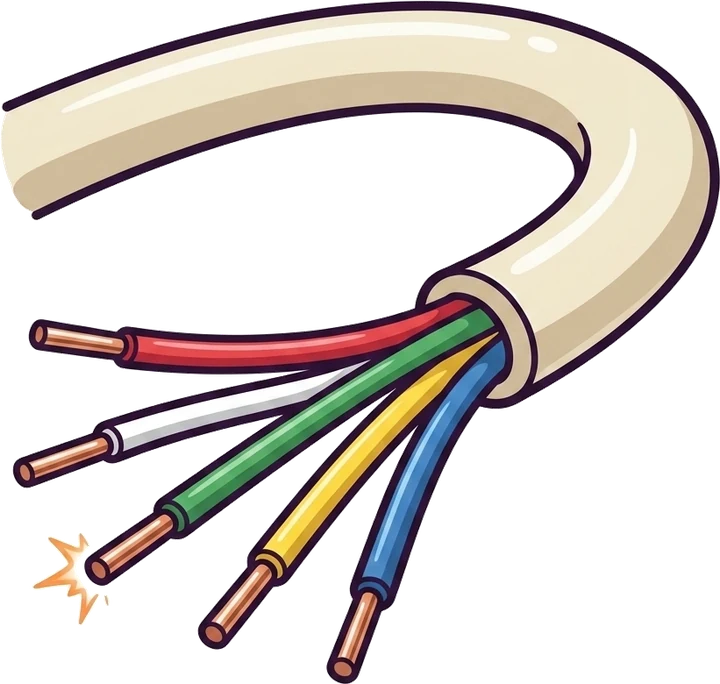
Low-voltage wiring is the nervous system of your AC. While the equipment itself runs on household power, the commands travel on thin 24-volt wires: from the thermostat to the air handler, and out to the contactor in the outdoor unit. When you lower the set point, it is these small wires that carry the message “start cooling.”
Why low-voltage wiring matters in South Florida
Small wires cause outsized confusion. A nicked thermostat wire, a corroded splice, or a chewed section can make a healthy system look completely dead, or make the outdoor unit ignore the thermostat entirely. Florida gives these wires plenty of enemies: weed trimmers catching the wire run at the outdoor unit, lizards and insects in connection boxes, corrosion in our salt-humid air, and lightning-season surges that pop the tiny fuse protecting the control circuit.
Signs of a low-voltage problem
- A blank thermostat, since many are powered by these same wires.
- The indoor unit runs but the outdoor unit never joins in, or the reverse.
- Cooling that comes and goes when nothing else changed.
- A system that went silent right after yard work near the outdoor unit.
What Kyzar checks
Control problems are among the fastest diagnoses when you test methodically: is the signal leaving the thermostat, arriving at the air handler, and reaching the outdoor unit? Our techs trace it step by step. It is a modest repair far more often than the dead-system symptoms suggest, which is exactly why testing beats replacing parts on a hunch.