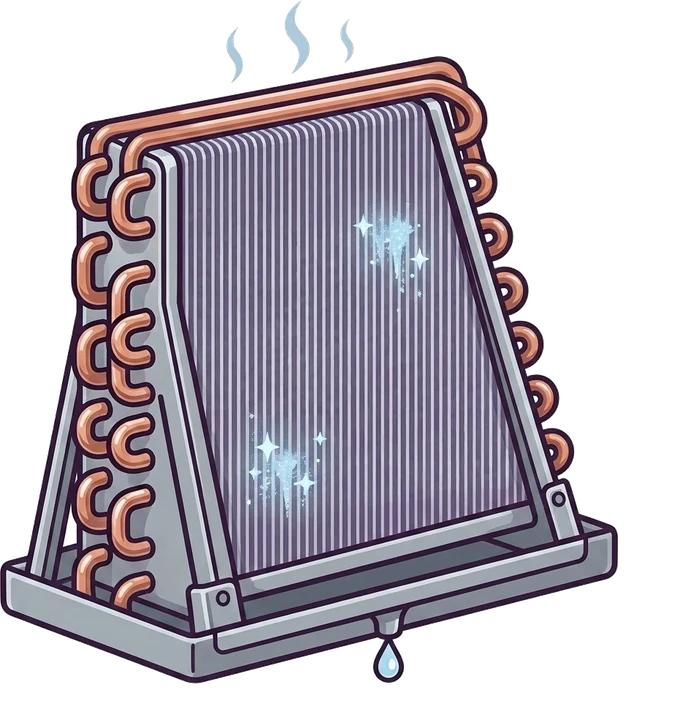
The evaporator coil is the cold half of your air conditioner. It sits inside or beside the air handler, filled with refrigerant that absorbs heat as your house air passes over it. Cool air continues into the ducts; the captured heat rides the refrigerant to the outdoor unit; and the moisture that condenses on the cold fins drips into the drain pan. Cooling and dehumidifying both happen right here.
Why evaporator coils matter in South Florida
Because the coil is wet with condensate most of the year, it is a magnet for dust and biological growth. A coated coil transfers heat poorly, which steals capacity, and in humid climates it is also the usual source of that musty smell some systems develop. The other classic Florida coil problem is freezing: starve the coil of airflow with a loaded filter, or lower its pressure with a refrigerant leak, and it ices into a block that barely passes air at all.
Signs of an evaporator coil problem
- Air blowing but not cold, or airflow that fades over a few hours.
- Ice visible on the copper lines near the indoor unit.
- A musty or sour smell when the system starts.
- Water problems, since a frozen coil thaws into a lot of water at once.
What Kyzar checks
A frozen or dirty coil is a symptom with several possible causes, so we measure airflow, inspect the coil surface, and check refrigerant pressures before naming the culprit. If you find ice, shut the system off and let it thaw before anyone can test it honestly. The coil sits in sealed refrigerant circuitry, so cleaning or repair inside it is licensed-pro territory.