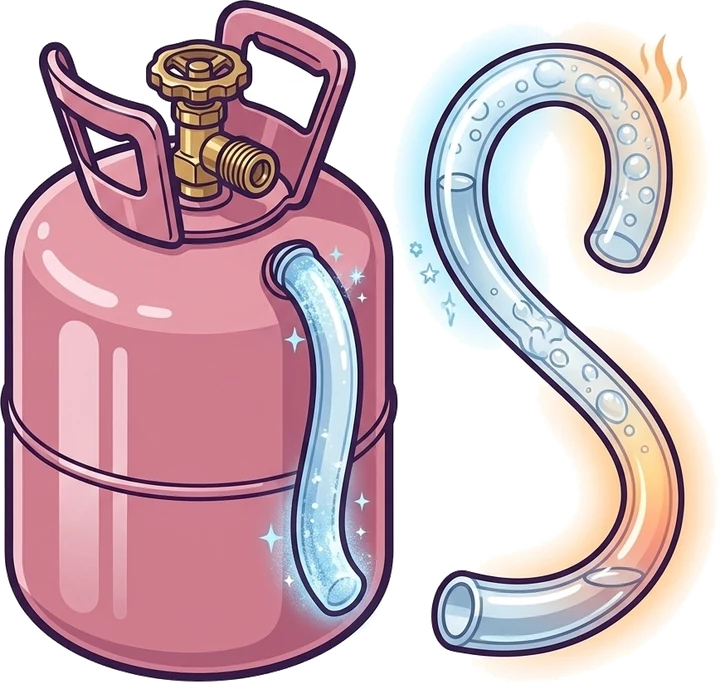
Refrigerant is the fluid that makes air conditioning possible. It absorbs heat from your indoor air as it evaporates in the cold indoor coil, carries that heat outside through the line set, and releases it as it condenses in the outdoor coil. Then the cycle repeats. Many people call any refrigerant “Freon,” which is actually a brand name for the older R-22 that has been phased out; most systems of the last decade and a half use R-410A, and the newest use R-32 or R-454B.
The most important thing to know
Refrigerant is not a fuel. It does not get used up, and a healthy system never needs a top-off. If your system is low, the refrigerant went somewhere, which means there is a leak. Adding refrigerant without finding the leak is renting your comfort by the season, and it is one of the oldest shortcuts in this industry. An honest company searches for the leak, tells you where it is, and prices the actual repair.
Signs of a refrigerant problem
- Air blowing but not cold, or cooling that fades over days or weeks.
- Ice on the copper lines or the indoor coil.
- Hissing or bubbling sounds near the lines.
- A system that needed “a little refrigerant” last summer and needs it again this summer.
What Kyzar checks
Low refrigerant and weak airflow can look identical from the living room, so we measure pressures and temperatures before touching the charge. Refrigerant handling is federally regulated and licensed-tech-only work, both for safety and because charging a system by guesswork damages compressors.