
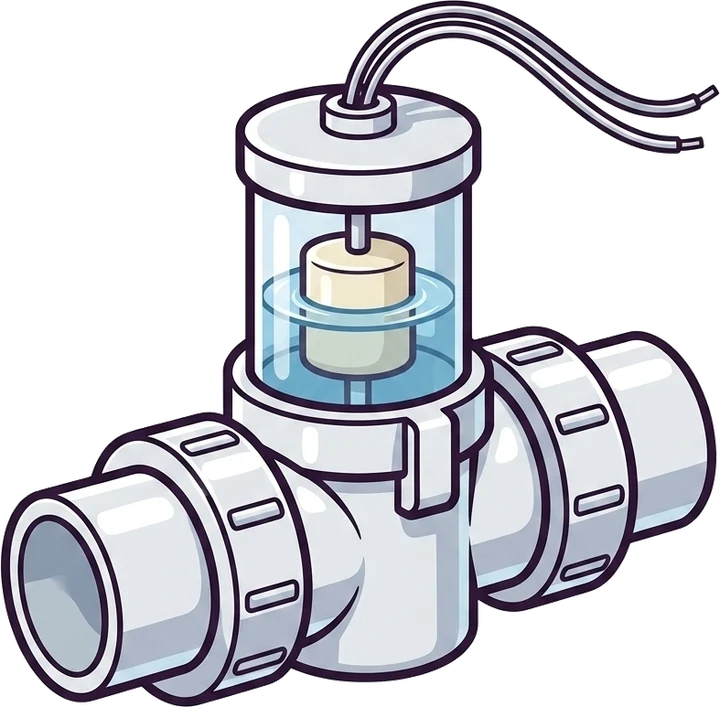
A float switch is a simple safety: a small float that rises with water level in the drain pan or drain line. If condensate backs up instead of draining, the float lifts and cuts power to the system, stopping the water production before it overflows. It costs little, and it regularly prevents four-figure water damage.
Why float switches matter in South Florida
Our number one cause of AC water leaks is a clogged condensate drain, and our systems make water nearly every day of the year. That combination makes the float switch one of the most valuable parts on a Florida air conditioner. Homes with air handlers in the attic have the most to lose, since everything below the unit is drywall and furniture.
The confusing part: it turns your AC off
When the float switch trips, the AC simply goes dead. No error message, no obvious cause. The house warms up and it looks exactly like a broken system. Many summer “my AC died” calls are actually a float switch doing its job over a backed-up drain. If your system stopped mysteriously on a humid day, especially if you can see water in a pan under the unit, the drain is the prime suspect.
What Kyzar checks
We test the float switch on every maintenance visit and confirm the drain actually flows, because a working switch attached to a chronically clogging drain just means repeated shutdowns. If your system has no float switch at all, which we still find on older installations, adding one is one of the cheapest pieces of protection you can buy.