
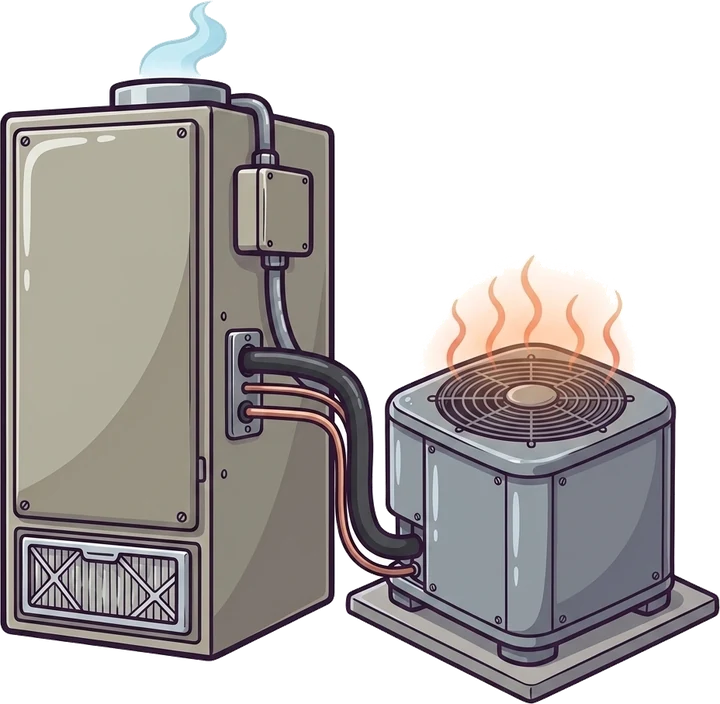
A split system is an air conditioner divided into two halves: an outdoor unit containing the compressor and condenser coil, and an indoor unit containing the blower and evaporator coil. The refrigerant line set and control wiring tie them together into one machine. If you have central air with a gray cabinet beside the house and an air handler in a closet, garage, or attic, you have a split system. It is by far the most common configuration in South Florida homes.
Why the split matters
Splitting the system puts each half where it works best. The noisy, heat-rejecting components live outside; the air-moving components sit at the center of the ductwork inside. The arrangement is also why diagnosing starts with a simple question: which half is misbehaving? An indoor fan running while the outdoor unit sits silent points one direction; an outdoor unit roaring while no air moves inside points the other.
Split system versus the alternatives
- Package unit: everything in one outdoor cabinet, common on older and manufactured homes.
- Mini-split: a split system without ducts, serving rooms through wall-mounted heads.
A traditional ducted split remains the backbone choice for most houses because it serves the whole home through existing ductwork with one system.
What Kyzar checks
Because a split system’s halves depend on each other, our diagnosis always looks at the whole loop: electrical components outside, airflow and coil inside, and the refrigerant circuit connecting them. Matching the two halves correctly also matters at replacement time; mismatched coils and condensers are a classic quiet shortcut that costs efficiency for the life of the system.