
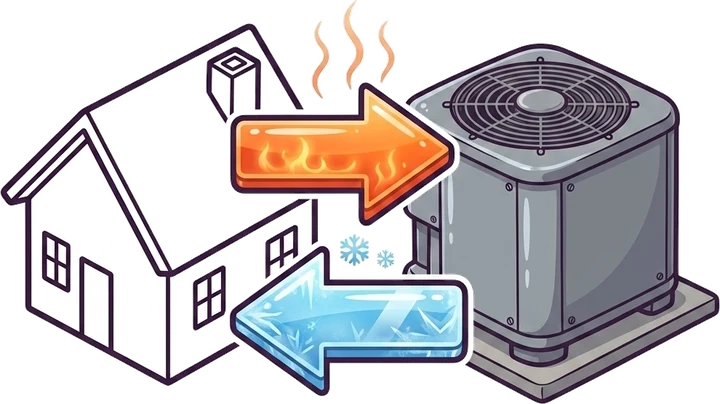
A heat pump is, mechanically, an air conditioner with a reversing valve. In cooling mode it works exactly like any AC: absorbing heat indoors and releasing it outside. Flip the valve and the cycle runs backward, pulling warmth from outdoor air and delivering it inside. One machine, both directions.
Heat pumps in South Florida
Here is the honest local truth: in Palm Beach County and the Treasure Coast, a heat pump spends almost its entire life in cooling mode. Our handful of chilly nights each winter is exactly the situation heat pumps handle easily, since they work best in mild cold. So the practical difference between a heat pump and a straight-cool system with electric backup heat in this market is modest, and either can be the right answer depending on the home and the equipment lineup. What matters far more to your comfort and bills is proper sizing, honest ductwork, and installation to manufacturer specification.
Terms you will hear around heat pumps
- Reversing valve: the component that changes the direction of refrigerant flow. It is the part that makes a heat pump a heat pump.
- Auxiliary heat: backup electric heating elements that assist on cold mornings. If you see “aux heat” on your thermostat in July, something is wrong.
- Defrost mode: a brief, normal reversal in heating season that keeps the outdoor coil from icing.
What Kyzar checks
A heat pump diagnosis covers everything a cooling diagnosis does, plus the reversing valve and its controls. A stuck reversing valve can leave a system blowing warm in summer, which mimics several other failures, so we test it directly rather than assume.