Generally not. Florida Power & Light (FPL), the utility, pays for damaged equipment when it is proven responsible for the loss, and its own rules put lightning, storms and other weather outside that. If a surge has killed your AC, two other routes may pay: FPL Home’s SurgeShield program, if you have it, and your homeowners policy.
Port St. Lucie is on the list of communities in FPL’s tariff, so for a home FPL serves there, FPL’s rules decide a claim against the utility. They are company-wide rules, not city rules. FPL Home is a separate company from the utility, and that split decides most of what follows.
If your AC stopped after a flicker or a storm, turn it off at the thermostat and the breaker and have it diagnosed before you file anything. Every route below needs to know what failed and why, and finding that out is the first step of any AC repair.
Does FPL Pay When a Surge Kills a Port St. Lucie AC?
When a claim shows FPL was responsible for the loss. FPL’s claims policy says that if it is proven FPL is responsible for all or some portion of a loss, it will do its best to determine a reasonable amount and resolve the claim, and that it uses depreciation to set what it pays for equipment.
Section 2.5 of FPL’s tariff, which the claims policy says is filed with and approved by the Florida Public Service Commission, says FPL “shall not be liable” to a customer for interruptions in service or fluctuations in voltage that result from a variety of events (the next section names them). So a surge, on its own, does not make FPL pay.
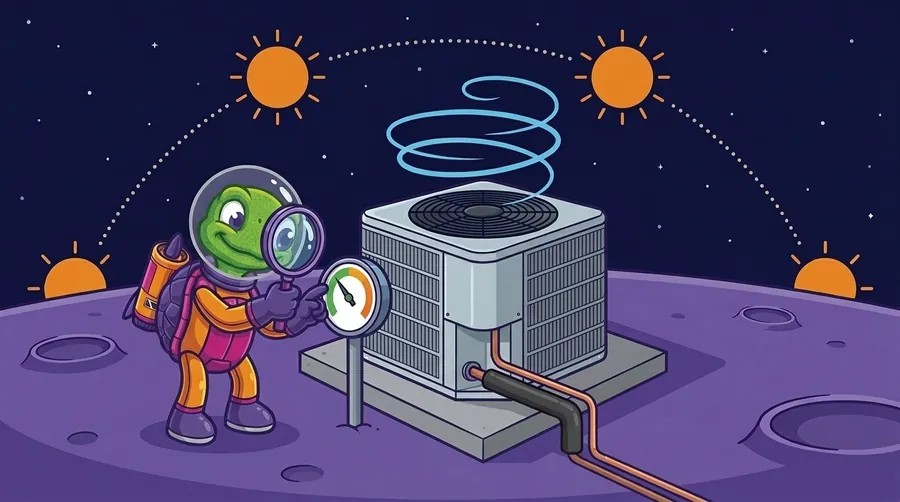
A surge can still damage an AC. Microchips are used in most major appliances, which leaves even that kind of equipment vulnerable to surges and spikes, as FPL’s power outage guide points out.
Which Surge Causes Does FPL Rule Out for Customers in Port St. Lucie?
Weather first. Among the causes FPL’s claims policy says it is not responsible for are hurricanes, weather-related conditions such as lightning, floods, extreme storms, heat or winds, and other acts of nature. It also rules out damage caused by the negligence of someone FPL does not employ (its example of a liable third party is a driver who crashes into a utility pole) and losses from animal contact. It says those examples are not the full list.
The tariff casts a wider net: the events section 2.5 says FPL is not liable for, when they cause interruptions or voltage fluctuations, include breakdowns of and repairs to FPL’s own plants and lines, emergencies, force majeure and even the ordinary negligence of FPL’s own employees, and it says that list is not complete.
Neither document lists the causes FPL accepts. So if your AC died in a thunderstorm, with lightning already ruled out, SurgeShield or your insurer is the better place to start.
How Does an AC Equipment Claim Work With FPL for Port St. Lucie Homeowners?
You file online, FPL investigates, and it aims to decide within 30 days of having everything it needs. Here is the process from FPL’s claims policy, in summary and not as legal advice:
- File the Equipment Loss Claim form. It is linked from the claims policy, and air conditioning is on its list of equipment. File as soon as possible: depending on the type of claim, it is possible to submit one too late.
- Send the paperwork. For property damage, FPL asks for detailed repair estimates or invoices, or purchase records, showing the model number, serial number and year of the equipment, plus photos of the damage if possible. Keep copies of all receipts.
- FPL investigates and decides. It works out how the incident happened, whether FPL caused it, the extent of the damage and what the law considers fair compensation, then calls or writes with its decision. Complex claims can take longer than the 30-day goal.
- If the answer is no. FPL explains the reason, and you can ask for an appeal to a Claims Agent. The policy also notes your right to file a court action at any point in the process, including a small claims action for claims within a dollar limit the policy names.
What Should a Technician Write Down When a Surge Hits Your Port St. Lucie AC?
What failed, what caused it, and the details that identify the equipment, on an itemized invoice or estimate. The technician documents the damage; FPL, FPL Home or your insurer decides what gets paid. Ask for:
- The equipment’s identity. Brand, model number, serial number and year or approximate age, from the unit’s data plate.
- The diagnosis. A description of the damage, the repair diagnosis and itemized repair costs. If the unit cannot be repaired, a SurgeShield claim also needs documentation supporting its replacement value.
- The cause, in writing. Whether the technician concluded a surge did the damage. For SurgeShield, that goes on the invoice and on FPL Home’s signed technician certification form, where the technician states, to the best of their knowledge and under penalties of perjury, that the damage was caused by a power surge through the electrical meter.
- Who did the work. FPL Home’s SurgeShield claim instructions require the technician or company name, address, phone number and license number on official company letterhead. We are licensed and insured, CAC1822395.
Keep the failed parts too: a SurgeShield claim requires the damaged item to be kept until the claim is resolved.
Surge damage can take time to show. FPL’s outage guide notes that the effects of surges can cause less noticeable damage over time as electronic components gradually break down. So an AC that fails later can still be a surge case, and FPL Home’s claim instructions say a technician’s evaluation helps confirm whether the surge damage occurred.
Does FPL Home SurgeShield Cover a Central AC in Port St. Lucie?
It can, in one situation: a surge came in through your electric meter and the SurgeShield device on that meter failed to stop it.
SurgeShield is a surge protector mounted at your electric meter, offered and administered by FPL Home, an unregulated subsidiary of FPL, and not by FPL, as the program page states. Your utility bill shows whether you have it. Its protection, and the limited manufacturer’s warranty that comes with it, start once the device is installed on your meter, not when you sign up. The program’s terms set conditions for an AC claim, including these four:
- The AC is on the list. The warranty names residential-grade central air conditioners, as long as the equipment is inside the home or within four feet of it.
- The device failed. Coverage is for damage from a surge that traveled through the device, only when the device failed to perform, and up to a per-appliance, per-occurrence cap and an overall cap, with a lower cap for electronic circuitry.
- The cause fits. The terms’ definition of a power surge includes lightning strikes and power returning after an outage. For example, an AC that died when the power came back can fit; one that struggled through a brownout does not, because damage from conditions beyond the device’s specifications, such as surges beyond its capability, brownouts and under-voltage from power delivery damage or flaws, is excluded. The terms also make no promise for a direct lightning strike that did not come down the utility lines and through the transformer and the device.
- You file on time. The claim form is due within 30 calendar days of discovering the damage, and late claims are permanently denied.
Before you file, and without touching or opening the meter or the device, look at the light on the device at your meter, as the claim instructions ask. A lit device is working, and coverage applies only if the device failed to protect your equipment, though you can still file if you believe it did.
Can a Port St. Lucie Homeowner Send the Surge Claim to Insurance Instead?
Yes, and FPL’s claims policy raises the option itself. It says your insurer may be able to reimburse you without an investigation and, in some cases, pay replacement value, and that your insurer and FPL can determine whether FPL was responsible and what, if anything, is owed.
You cannot be paid twice for the same damage, though. The SurgeShield terms say the manufacturer pays only for covered damage you have not recovered, and do not intend to recover, from a third party or an insurance carrier.
Whether your homeowners policy covers the AC at all, and how Florida deductibles and payouts work, is the subject of our guide to homeowners insurance and AC replacement.
How Can You Protect Your AC From the Next Surge in Port St. Lucie?
With layers, fitted by a licensed electrician or AC technician, and with one limit in mind: “Nothing protects against a direct lightning strike,” in FPL Home’s words, though quality surge protection equipment helps block indirect strikes.
- At the panel. A protector at the service entrance diverts large surges on the power line before they enter the house, and protectors wired into or next to the panel are best left to a licensed electrician, per a homeowner guide to surges from the National Institute of Standards and Technology.
- At the meter. SurgeShield covers the path through the meter. For surges that come in another way, and for sensitive electronics, FPL Home suggests plug-in surge suppressors.
- At restart. FPL’s outage guide suggests a time-delay relay for an air conditioner that does not already have one, which keeps the unit from restarting for about three to five minutes and minimizes the possibility of damage to the compressor. A technician can tell you if yours has one.
- Before a storm. Our hurricane season AC prep guide covers turning the system off at the thermostat and the breaker, and bringing it back afterward.
Your Next Move on FPL Surge Damage to a Port St. Lucie AC
- Turn the AC off at the thermostat and the breaker, and leave it off until it has been checked.
- Check your FPL bill for SurgeShield. If you have it, look at the device light and file with FPL Home within 30 calendar days of discovering the damage.
- Have a technician write down what failed, the model, serial number and year, and whether a surge caused it, and keep the failed parts.
- File with FPL when FPL may have been responsible; its policy says it is not responsible for lightning, storms and other weather. Otherwise, call your insurer.
We always put a repair option on the table, even when we are recommending a replacement. To have a surge-hit system checked, book a visit or start from our Port St. Lucie service area page.