Often, yes. On a hot Boynton Beach afternoon, a healthy air conditioner can run through the hottest hours without a break, and one that only rests once the sun goes down may be doing exactly what it was sized to do. A correctly sized system here is built to just keep up on the hottest afternoons of a typical summer, so long runs on those days are the design, not a defect.
The length of the run isn’t the test. What separates normal from a fault is whether the house holds the temperature you set, and stays dry, while the system runs. When it runs long and still loses ground, that’s a job for AC repair, and the last section lists the signs.
When Is All-Day Running Normal for a Boynton Beach AC?
When it’s hot outside and the house is keeping up. If the thermostat holds your setting through the afternoon and the rooms feel dry, long runs on a summer day are the system doing its job, and on the hottest days that can mean running most of the day.
It’s a warning when the opposite shows up: the house falls behind the setting on ordinary summer afternoons, not just the year’s hottest ones, or a single-stage system runs without a break on a mild day, when far less heat is coming in than it was sized for. Variable-speed systems are the exception to that second point, as we explain below.
Two related questions have their own guides. How long a normal cooling cycle runs is covered in our Jupiter guide to short cycling. Choosing a setpoint, and the week-long log that shows whether your system can hold it, are in our guide to summer thermostat settings.
Why Does a Correctly Sized AC Run Nonstop on the Hottest Days?
Because it was sized to keep up with those days, not to coast through them.
A load calculation sizes a system for a design temperature: a hot afternoon of a typical summer, not the hottest hour on record. For Palm Beach County, which takes in Boynton Beach, ENERGY STAR’s 2015 county design temperature guide for certified homes lists a 1% cooling design temperature of 91°F. By the definition in a Department of Energy Building America design guide (last updated in 2010), that is a temperature the outdoor air tops on average for 1 percent of the hours in a year.
Right-sizing means matching the system to the heat the house takes on at that design temperature, so on an afternoon near it there is little capacity left over, and a correctly sized system runs long, often without stopping. In the hottest hours of the year, the Building America program’s guide to right-sizing (last updated in 2009) says a properly sized system may only be able to cool the house to a couple of degrees above the indoor temperature it was designed for.
That small shortfall is the price of a system that isn’t oversized. A bigger unit would finish sooner and shut off, and why that is the wrong fix in a humid house is covered in our Palm Beach Gardens sizing guide.
What Does Indoor Humidity Say About a Long-Running AC in a Boynton Beach Home?
Whether the long run is paying off. In most homes, the central AC is the only thing taking moisture out of the air, unless a stand-alone dehumidifier is also in use. So when it isn’t running, indoor humidity goes unchecked, as the Building America right-sizing guide points out. Longer runs give that moisture time to condense on the indoor coil and drain away.
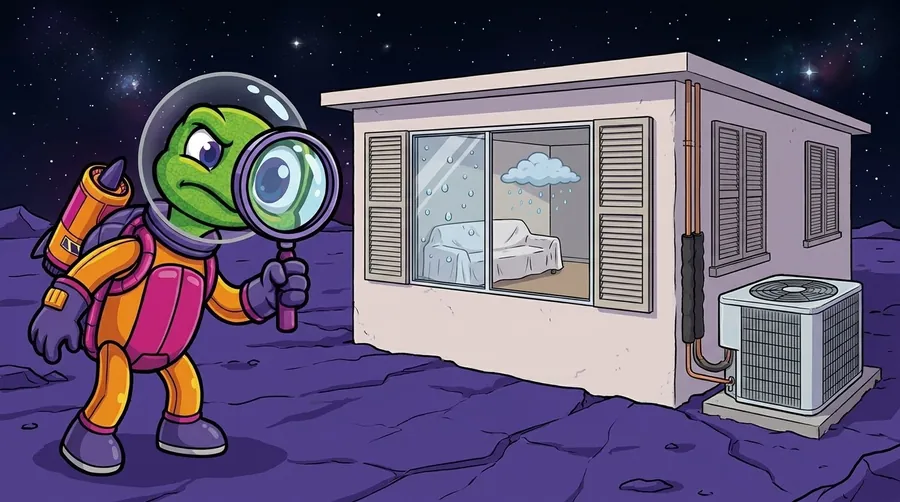
That makes humidity the second half of the keeping-up test. A system that runs all afternoon, holds its setting and leaves the rooms dry is getting full value from the runtime. One that runs all day while the rooms still feel clammy isn’t keeping up with the moisture, even when the thermostat says it reached the number.
What reading to aim for, and how to bring it down, are in our Delray Beach guide to lowering indoor humidity. If the house reaches its temperature but doesn’t dry out, our Boca Raton dehumidifier guide looks at when the AC alone isn’t enough.
How Can You Check Whether a Running AC Is Cooling Enough in Boynton Beach?
Start with what you can see without tools: is the house holding your setting, and is it staying dry? A system that manages both is cooling enough, however long it runs. For a number, the measurement that matters is the temperature split, the drop in air temperature across the indoor coil.
Measured properly, that’s a technician’s reading, taken at the equipment. Diagnostic guidelines for contractors posted by the Department of Energy take the split between the return and supply plenums, the boxes where air enters and leaves the indoor unit, and use it to determine whether refrigerant or other system defects are significantly affecting capacity.
There’s no single right number, either. The HVAC blog of the Air Conditioning Contractors of America says the familiar 15 to 20 degree rule of thumb for the split “is not a one size fits all,” because the split a system should produce depends on the manufacturer’s performance data at that day’s indoor and outdoor temperatures and airflow. A good split can still point the search away from the equipment, toward the ducts or the house. So a number read off a vent at home is a rough clue, not a verdict.
What you can bring to the call is the pattern: your setting, what the thermostat reads late in the afternoon, whether the air from the vents feels as cold as it used to, and how damp the house feels.
Do Variable-Speed Systems in Boynton Beach Homes Run Longer by Design?
Yes. A single-stage system runs at full output until the thermostat is satisfied, then shuts off. A variable-speed system matches its output to the heat coming in, so instead of stopping, it can slow down and keep going. Carrier’s comparison of compressor types says variable-speed units operate longer at lower speeds, and that a two-stage system, the in-between option, stays in its low stage for the vast majority of the cooling season.
So with these systems, an outdoor unit that rarely goes quiet tells you little on its own. The same two questions decide whether all-day running is normal: is the house holding its setting, and is it staying dry? A variable-speed system that runs all day while the rooms drift warm or damp has the same problem a single-stage system would.
If you’re not sure which kind you have, your installation paperwork or a technician can tell you.
Does Running All Day Wear Out a Boynton Beach AC Faster?
Not the way most people fear. Every hour of running adds some wear, and a South Florida system logs a lot of hours, which is part of why one here may wear out sooner than average. Our Boynton Beach guide to how long an AC lasts covers what shortens that life.
But a long, steady run is gentler on the equipment than the same afternoon broken into many short ones. Starts are the hard part for a compressor, which is why repeated short runs wear it hardest; our guide to what short cycling does to a compressor has the detail. Even setting humidity aside, the Building America right-sizing guide says right-sizing would help extend the life expectancy of the equipment by avoiding short-cycling of the compressor.
The hours worth worrying about are the ones a system spends straining. For example, running all day against a dirty coil, a clogged filter or a low refrigerant charge means the system works harder for the same cooling, and those faults are the subject of the next section.
When Does Nonstop Running Mean Repair for Boynton Beach Homeowners?
When the long runs stop paying off. These are the signs to act on:
- The house falls behind your setting on ordinary afternoons, not just the year’s hottest ones, or it no longer holds a setting it used to.
- A single-stage system runs without a break on a mild day.
- The air from the vents feels warmer or weaker than it used to.
- The rooms stay clammy even though the system rarely stops.
- There’s ice on the copper refrigerant lines or on the indoor unit.
The usual causes each have their own guide:
- A clogged filter, a dirty coil or leaky attic ducts can make the system work harder or run longer for the same cooling. Our Port St. Lucie guide to high summer bills covers all three.
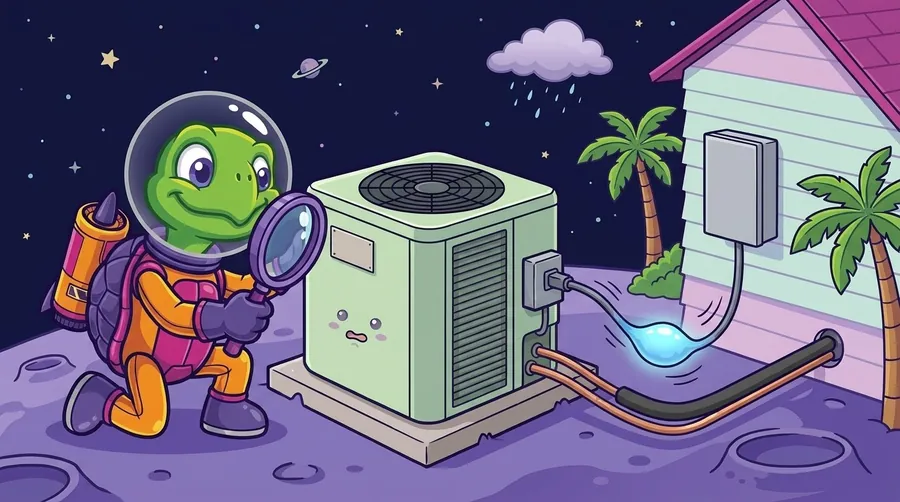
- Low refrigerant often means a leak, and finding one is technician work. How a leak gets found is in our guide to the signs of a refrigerant leak in Boynton Beach.
- Ice has its own causes and its own steps, set out in our Boca Raton guide to an AC that keeps freezing up.
- A system that has never kept up, even when it was new, raises a sizing question, and the Palm Beach Gardens sizing guide linked above shows how the right size is worked out.
One false alarm is worth ruling out first. If it’s just the indoor fan that keeps running, while the outdoor unit starts and stops, the thermostat’s fan setting is the likely reason: on ON, the fan runs continuously by design. Why AUTO is the better choice here is in the fan section of our humidity guide for Delray Beach homes.
If any of the signs above fit, that’s the time for a repair visit in Boynton Beach.
In Summary
- On a hot Boynton Beach afternoon, long runs are normal when the house holds its setting and stays dry.
- ENERGY STAR lists Palm Beach County’s 1% cooling design temperature as 91°F. Near it, a right-sized system has little capacity left over; above it, the Building America right-sizing guide says a properly sized system may only be able to cool the house to a couple of degrees above the indoor temperature it was designed for.
- In most homes without a stand-alone dehumidifier, indoor humidity goes unchecked when the AC isn’t running, so humidity is the other half of keeping up.
- The temperature split is a technician’s reading at the equipment, judged against the manufacturer’s data, not one rule-of-thumb number.
- Variable-speed systems operate longer at lower speeds by design.
- A long, steady run is gentler than many short ones; the hours to worry about are the ones spent straining against a fault.
- Act when the house falls behind on ordinary afternoons, a single-stage system runs nonstop on a mild day, the vents blow warmer or weaker, the rooms stay clammy, or ice appears.
If yours is running all day and losing ground, schedule a visit online. Someone is on call seven days a week.