It is a hot Jupiter afternoon. The outdoor unit kicks on, runs a few minutes, goes quiet, then starts again, and the house never quite catches up. That stop-and-start pattern is short cycling, and it is the system telling you something.
Bryant’s guide to AC short cycling says the common causes include restricted airflow, an oversized unit, refrigerant problems and thermostat issues. A few you can check yourself; the rest call for AC repair. Here is how to read the pattern, and where your own checks should stop.
What Counts as Short Cycling for Jupiter Homeowners, and What’s Just a Long Run?
It comes down to how the run ends. Lennox’s short-cycling guide draws the line: a normal cycle runs until the thermostat is satisfied, then stays off until the room warms again, while a short cycle shuts off before the house reaches the set temperature and turns back on shortly after.
A long run is not always a fault. Trane’s short-cycling guide says a properly sized and operating system may run for hours with very short off cycles on hotter days, so a system that runs and runs on a hot Jupiter afternoon may simply be keeping up.
What starts and stops is the compressor in the outdoor unit. Something is ending each run early: the thermostat thinks the job is done, a safety control is shutting the compressor off to protect it, or a failing electrical part is cutting it out.
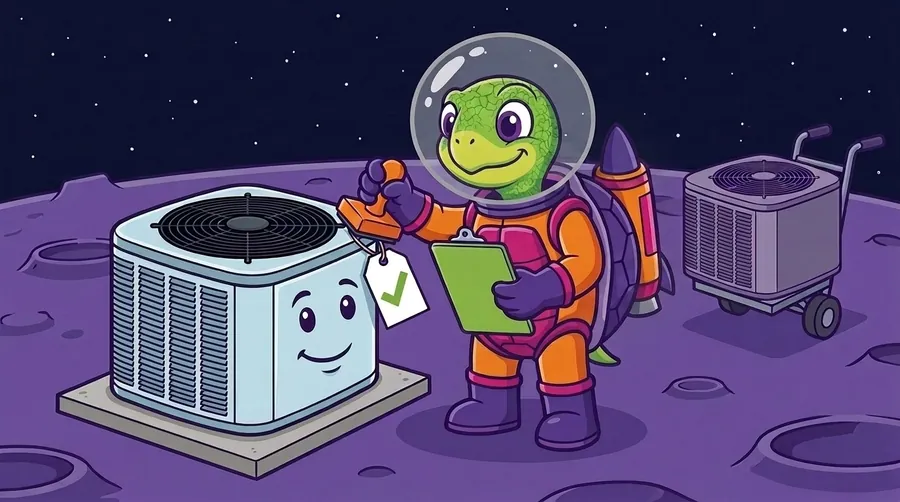
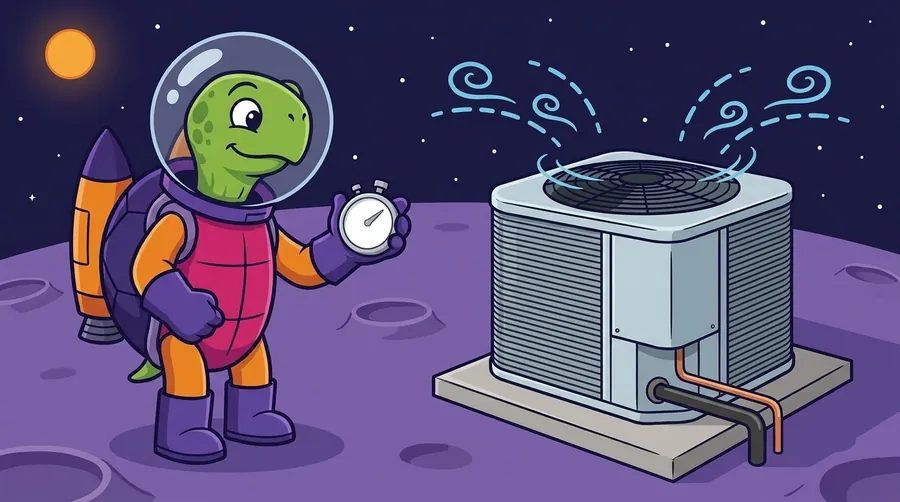
Time it before you decide, and count the run and the off time separately. Listen at the outdoor unit and note when it starts and stops; that is the run. Then note how long it stays off, over a few cycles, and whether the thermostat had reached its setting each time. Nothing gets opened, and the record helps a technician.
A system that shuts off and stays off until a breaker is reset is a different problem, covered in our post on why an AC keeps tripping the breaker.
Why Do Oversized Systems Short Cycle So Often in Jupiter?
Because an oversized system satisfies the thermostat too fast, and oversizing has a documented history in Florida homes. Trane’s guide says an oversized system reaches the set temperature too quickly and shuts off before the cycle is complete, and that an improperly sized air conditioner can short cycle from the day it is installed. If yours has done this since it went in, sizing moves up the list.
A 1997 paper in ASHRAE Transactions, by researchers at Florida Power and Light and the Florida Solar Energy Center (FSEC), compared the cooling capacity installed in homes built in 1990 or later, in five Florida counties with Palm Beach among them, with each home’s load as calculated by the Air Conditioning Contractors of America’s Manual J method. The authors found that more than half had a cooling capacity above 120 percent of the Manual J value. Palm Beach is Jupiter’s county. The study is old: read it as a sign of how common the habit was.
What those short runs do to humidity in a cool but clammy house is covered in our post on why a cold house can still be humid. Lennox calls replacing an oversized system with a properly sized unit the only long-term fix. Our advice: before anyone quotes one, ask for the size to be checked against a load calculation for your house.
How Does a Dirty Coil Push an AC Into Short Cycling?
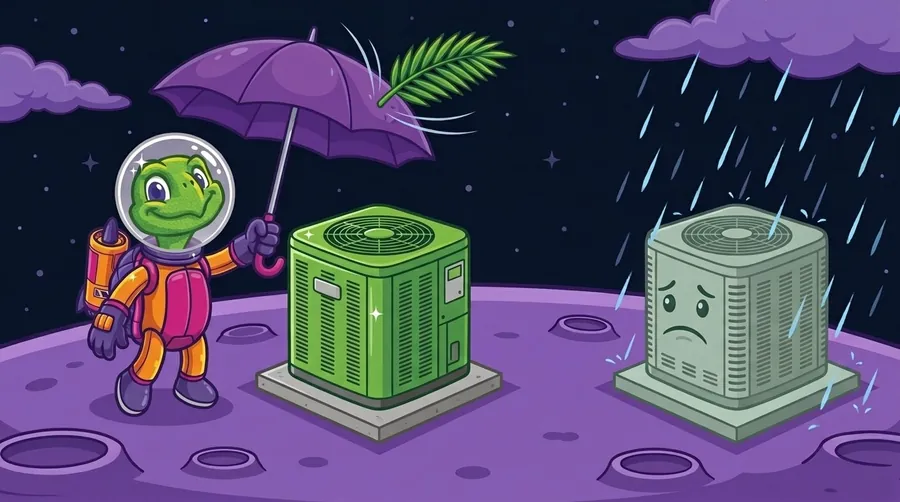
Through heat, and the safety controls that guard against it. Carrier’s guide to cleaning AC coils says dirt buildup insulates a coil and reduces its ability to transfer heat, and it lists longer cycles than usual among the signs of a dirty coil. Short cycling comes when the trapped heat trips a safety control.
Carrier’s troubleshooting guide for an AC that won’t turn on says debris on the outdoor coils can cause the system to overheat and shut down. A pressure switch is one way that shutdown happens: Lennox’s product specifications for its Merit Series ML14KC1 air conditioner list a high-pressure switch that protects the system from high pressure that can result from a fan failure or a blocked or dirty coil, and it resets automatically. Trip, reset, restart, trip again: that is short cycling.
Ice on the indoor coil is a different cause, covered in our Boca Raton post on an AC that keeps freezing up.
Coil cleaning is maintenance, and the evaporator coil sits inside the indoor unit, so treat it as technician work; see what a tune-up covers.
Can a Low Refrigerant Charge Make a Jupiter Compressor Cycle Off Early?
Yes, and on purpose. Lennox’s short-cycling guide says a system low on refrigerant, often because of a leak, can’t absorb enough heat from your home, which causes erratic pressure and forces the unit to shut off early to protect itself.
Here is what that protection looks like on one model. Lennox’s ML14KC1 specifications list a low-pressure switch that shuts the unit off if suction pressure falls below its setting, provides loss-of-charge and freeze-up protection, and resets automatically. The compressor stops, the switch resets, the compressor restarts on the same short charge, and the pattern repeats.
Finding and fixing a leak is not homeowner work: the EPA’s Section 608 rules require technicians who maintain, service or repair equipment that could release refrigerant to be certified.
Where Should the Thermostat Sit in a Jupiter Home to Avoid False Cycling?
Somewhere it can read the whole house. Trane’s guide says a thermostat should be installed in a central location, away from registers and heat-generating appliances and out of direct sunlight, and that moving a badly placed one can sometimes resolve short cycling.
Bryant’s guide says a thermostat near a heat source, in direct sunlight or directly beneath a supply register may get inaccurate readings, and that cold air blowing directly on it can make it reach the set temperature prematurely. It ends the run while the far rooms are still warm, then calls for cooling again.
In a Jupiter home, look for the ordinary culprits: a register blowing toward the thermostat’s wall, afternoon sun through a nearby window or slider, a lamp or TV just below it. Turning the register’s louvers away, drawing a blind or moving the lamp takes a minute. Moving the thermostat itself means new wiring, which is a technician’s job.
Placement is separate from the setting. How the setpoint changes each run is covered in our post on how the setpoint shapes each cooling cycle.
How Do Repeated Starts Wear Down the Compressor and Capacitor on a Jupiter AC?
Every start is a strain, and short cycling piles them up. Carrier’s short-cycling guide says the constant on-and-off motion places immense strain on the compressor and fan motors, and that the frequent startup process overheats the compressor and motors.
The capacitor is part of every start: it stores a charge while the system is idle and releases it in a burst to get the motors spinning. More starts mean more bursts, and Bryant’s capacitor guide says heat exposure and frequent cycling can shorten a capacitor’s life. A short-cycling system in a Jupiter summer gets plenty of both.
The contactor, the switch that sends power to the outdoor unit, closes once for every start. The Department of Energy’s 2016 Energy Saver 101 infographic on home cooling says compressor and fan controls could be worn out from a system turning off and on too frequently.
Carrier says a short-cycling AC will likely have a significantly reduced lifespan. How long a system should last is the subject of our separate guide to AC lifespan in Boynton Beach homes.
How Long Should a Normal Cooling Cycle Run in Jupiter?
There is no single number. Bryant says a typical cycle varies with the outdoor temperature, indoor conditions, system capacity and thermostat settings, so no single runtime defines a normal cycle for every home. Carrier describes a healthy run as a consistent 15 to 20 minutes and says that, as a general rule, an AC that cycles about every 10 minutes may be short cycling, while Lennox says that under normal conditions an AC should run for about 10 to 20 minutes per cycle.
Weather matters too. Trane’s guide says a properly sized and operating system may run only 3 to 5 minutes and stay off for hours in mild conditions at the start of the season. Bryant’s practical warning sign is repeated cycles of only a few minutes, especially several within an hour. On a hot Jupiter afternoon, when long runs are more likely, that pattern is worth a call.
Some controls also enforce minimum times. Trane’s glossary entry on short cycling says its controls enforce a minimum run time of 3 minutes and a minimum off time of 5 minutes for the compressor. Those are Trane’s settings, not a universal rule.
Short runs are also less efficient. ENERGY STAR’s 2005 fact sheet on right-sized air conditioners says an air conditioner’s efficiency is low when it first starts and peaks after about 10 minutes, so runs that keep ending sooner never reach the system’s most efficient stretch.
Which Short Cycling Fixes Can a Jupiter Homeowner Handle Without a Technician?
Four checks, and none of them opens the equipment. Bryant’s troubleshooting guide draws that line: never remove electrical access panels or try to test capacitors, compressors or contactors yourself, because lethal high-voltage electricity can remain stored even after the power has been disconnected.
- The thermostat’s basics. Mode on Cool, the setpoint below the room temperature, and fresh batteries if it takes them; Bryant’s short-cycling guide says a weak or dying thermostat battery can lead to rapid short cycling. These confirm the thermostat is really calling for cooling; they do not fix short cycling that has another cause. A thermostat that is itself failing is covered in our Port St. Lucie thermostat guide.
- A look for ice. With every panel closed, look for ice on the copper refrigerant lines at the outdoor unit and where they meet the indoor unit. If the indoor unit is up in the attic, check only the outdoor end; the ladder and the heat up there make the indoor end a technician’s job. If you find ice, stop: set the thermostat to Off and turn to our Boca Raton guide to an AC that keeps freezing up.
- Open vents and returns. Make sure every supply and return vent is open and clear of furniture, rugs and other items.
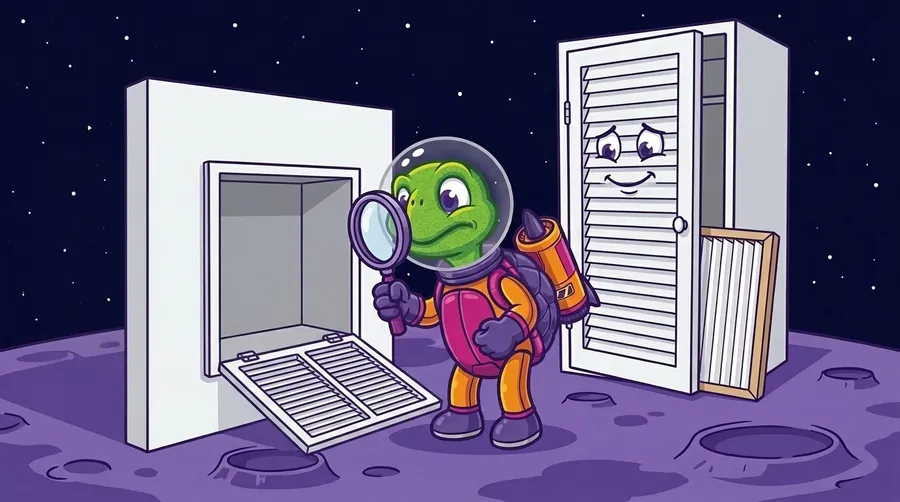
- A fresh filter. Lennox says a dirty or clogged filter restricts airflow, causing the system to overheat and shut down prematurely. Our Coral Springs filter guide has the full steps for checking and changing one, starting with cutting the power.
If it keeps short cycling after those checks, Bryant’s guide names improper sizing, refrigerant problems, frozen coils, electrical issues and equipment faults as possible causes that require professional diagnosis. Carrier’s guide to AC capacitors says a failing capacitor can make the unit shut off and restart rapidly, and H.L. Bowman, a Pennsylvania HVAC contractor, names worn-out contactors as another electrical cause of short cycling. Both sit behind the panels Bryant says to leave closed, so confirming either one takes a technician’s tests. That is the point to book AC repair in Jupiter.
Final Thoughts
- A short cycle ends early and restarts soon after; a long run on a hot Jupiter afternoon may simply be the system keeping up.
- Time a few cycles: each run, each off stretch, and whether the thermostat reached its setting.
- Lennox calls a properly sized replacement the only long-term fix for an oversized system.
- A dirty coil or a low charge can trip the system’s own protection; a badly placed thermostat ends runs on a false reading.
- Every extra start can add wear to the compressor, the capacitor and the controls that switch the system on.
- Your checks: thermostat basics, a look for ice, open vents and returns, a fresh filter. Finding ice ends them.
If it still stops and starts after those checks, book a visit online and have your cycle times ready. Locally owned, over twenty years in South Florida.