If your air conditioner is old enough that every new noise makes you wonder, you are really asking two questions. How much life does it have left? And when something big finally breaks, is it worth fixing?
The first answer is a range, not a date, and where a Boynton Beach system lands in that range depends partly on things you can see and change. Below are the published lifespan figures and who stands behind each one, what wears a South Florida system out early, how the expensive parts age, which signs point to replacement rather than repair, and where repairs stop making sense. If it does come to replacement, a new system’s life starts with a properly sized AC installation.
What Wears Out an AC System Years Early in Boynton Beach?
Hours and humidity, mostly. To see how many years they cost, start with the baseline. Carrier and Lennox both put a central air conditioner at 15 to 20 years, and Trane puts it at about 15. All three say climate moves that number, and Trane names Florida outright: a system run long and hard there, year after year, may wear out before the average life expectancy.
A neutral figure that covers Florida comes from the federal government. In its purchasing guidance for federal buyers, updated in December 2024, the Department of Energy’s Federal Energy Management Program works out a central air conditioner’s lifetime energy cost in hot-humid states, Florida among them, on an average life of 18 years, six fewer than the 24 years it uses for northern states. That is a planning assumption for cost comparisons, not a count of real systems, but it puts a number on what Trane describes.
Can one last 30 years? Carrier says it is rare but possible with exceptional maintenance and mild usage.
Lennox fills in the humidity side: it says a region with extreme humidity and hot temperatures may put more stress on a system and lead to a shorter lifespan. Beyond the climate, the factors that vary from home to home are how the system was installed, how it is used and how it is maintained, and the sections below take them one at a time.
When Do Boynton Beach AC Systems Usually Start Showing Their Age?
Around 10 years is when ENERGY STAR starts flagging a system, and by the mid-teens it is inside the range Bryant gives for planning a replacement.
ENERGY STAR’s guide to when it is time to replace lists an air conditioner more than 10 years old as a sign to consider replacing it, and the reason it gives is the savings from high-efficiency equipment. That is a different question from how long the old equipment keeps running, which is what the 15 to 20 years from Carrier and Lennox describes. A system at that age has not failed anything. It has reached the point where its condition is worth checking.
Bryant tells most homeowners to plan for a replacement every 12 to 17 years. Put that next to the 18 years the Department of Energy’s Federal Energy Management Program assumes for hot-humid states, Florida among them, as a planning figure for its cost comparisons, and the teens are when a Boynton Beach system is worth planning around rather than being surprised by.
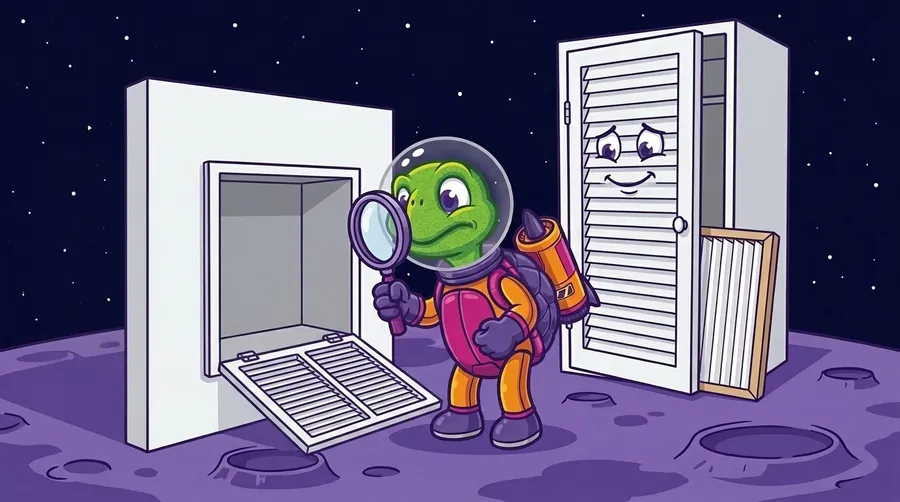
All of that assumes you know the age. If you bought the house without the paperwork, Lennox suggests an HVAC inspection to work out when the unit might need replacing, ideally when you first move in. And if the outdoor unit or the indoor coil was ever replaced on its own, the two halves of the system will not be the same age, so ask about both.
How Long Do the Compressor and Coil Last Compared With the Rest of the System?
A little less than the system as a whole, by one manufacturer’s numbers. Bryant’s parts reference puts the average lifespan of a compressor and of the indoor evaporator coil at 10 to 15 years, and of the outdoor condenser coil at 10 to 20 years. It calls those ranges planning estimates that vary with equipment type, operating conditions and maintenance, among other things. Bryant gives the whole system 15 to 20 years, so its ranges put the compressor and the indoor coil a few years short of the system around them and the outdoor coil closer to it.
The compressor carries the most weight. Carrier describes it as often the component that dictates the lifespan and efficiency of the entire air conditioning system, because it works so hard. That makes a failed compressor on an older system the clearest moment to weigh repair against replacement, which the last section of this guide takes up.
If either part fails well short of those ranges, look at the conditions in the next section before blaming age.
What Makes an AC System Wear Out Faster in Some Boynton Beach Homes?
Every home on a Boynton Beach street gets the same weather. Three things that do differ from house to house are how the system was installed, how hard the household runs it and where the equipment sits.
Installation and sizing. Bryant says an improperly installed or incorrectly sized unit works harder than necessary, which leads to rapid wear. What to look for before a new system goes in, from the load calculation to matched indoor and outdoor equipment, is laid out in our guide to choosing an AC brand.
How hard it runs. Bryant says constant operation, whether from poor insulation or incorrect thermostat settings, shortens component life. Which setting actually suits a South Florida summer is its own question, answered in our guide to summer thermostat settings.
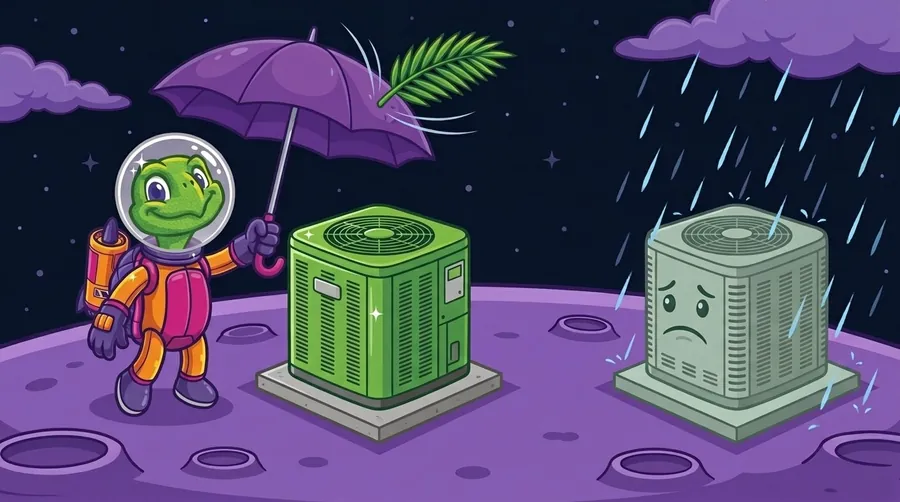
Where it sits. Lennox notes that installing a unit in a shaded area can help it avoid the extra demand of working in direct heat. Homes on the coastal side of Boynton Beach add salt air to the list, a wear factor of its own that our guide to protecting an AC unit from salt air covers in full.
Which Signs Tell Boynton Beach Homeowners a System Is Near Replacement?
No single sign settles it. Beyond the age, ENERGY STAR’s list of signs that it may be time to consider replacing equipment or improving the overall system includes frequent repairs while energy bills go up, rooms that are too hot or too cold, humidity problems and a noisy system.
Read the same list closely, though, and ENERGY STAR’s own explanations for several of those signs point past the equipment as well: uneven rooms to improper equipment operation, duct problems or inadequate insulation; summer humidity to poor equipment operation, inadequate equipment or leaky ductwork; noise to an undersized duct system or a problem with the indoor coil. New equipment on the same ducts inherits the same duct problems, so the diagnosis has to look at the ducts as well as the equipment.
The signs that point to replacement rather than repair are the ones that stack up: an older system, a major part failing, and repairs that keep coming. Bryant’s version is blunt: an air conditioner over 15 years old that is having problems is likely approaching the end of its useful life.
Does Regular Maintenance Really Help an AC Unit Last Longer in Boynton Beach?
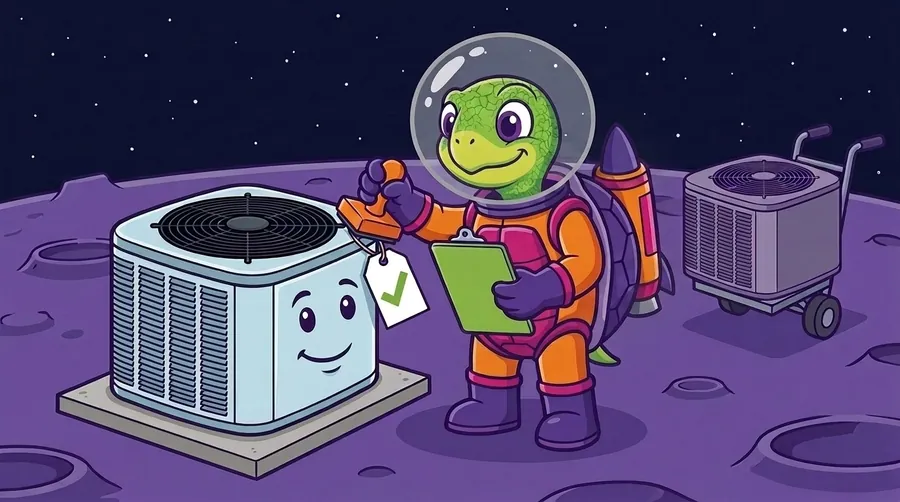
Yes, for reasons you can check. ENERGY STAR’s maintenance checklist, written for an annual pre-season check-up by a contractor, ties several of its items directly to equipment life: dirty evaporator and condenser coils make a system run longer and reduce the life of the equipment, too much or too little refrigerant does the same, and faulty electrical connections can reduce the life of major components. The check-up is where those get caught.
How many years that buys is harder to pin down. Carrier says some units may last up to 25 years with diligent care, while neglected systems might fail around the 10-year mark. Those are a manufacturer’s estimates, and Carrier presents its own lifespan range as an estimate too. What a tune-up cannot change is the climate, or how the system was sized and installed.
Your own share is small, and it counts. ENERGY STAR’s checklist warns that a dirty filter can damage the equipment and lead to early failure; how often to change one in a South Florida home is the subject of our Coral Springs filter guide. Outside, Bryant’s advice is to keep the outdoor unit free of leaves, vegetation and other debris so air can move freely around it. Leave the coils and the refrigerant charge to the contractor at the check-up; for the refrigerant, EPA’s FAQ for homeowners says Section 608 certification is required to recharge an air conditioner.
When Do Repairs on an Old System Stop Making Sense for Boynton Beach Homeowners?
When a major repair lands on a system that is already near the end of its expected life, or when the repairs keep coming. Bryant says replacement may be more cost-effective if the system is older, needs frequent repairs or has a major component failure. Carrier’s rule of thumb is that when the cost of a repair approaches 50 percent of the value of a new system, it is usually time to upgrade.
Is a 20-year-old system worth fixing? At 20, a system is already past the 18 years the Department of Energy’s Federal Energy Management Program assumes for hot-humid states, Florida among them. That is a planning figure, not a count of real systems, but a major failure at that age, a compressor for instance, is exactly the case Bryant describes. A small part on a system that otherwise runs well is a different decision, and age alone does not make it for you.
The refrigerant is the other piece, and two separate changes are worth keeping apart. The older change concerns R-22. EPA says no new R-22 has been made or imported since January 1, 2020, that it does not require homeowners to replace R-22 equipment, and that used R-22 cleaned up to the same specifications as new will continue to be available. The second is EPA’s restriction on refrigerants with a high global warming potential, which began on January 1, 2025 and covers new residential air conditioning systems. For an existing R-410A system, EPA’s phasedown FAQ says homeowners can maintain and repair it throughout the useful life of the equipment, including replacing a failed outdoor unit or indoor coil with a similar R-410A part. EPA’s FAQ for homeowners adds that Section 608 technician certification is required for work that could reasonably be expected to violate the integrity of the refrigerant circuit, including adding or removing refrigerant or components, so swapping either part is a job for a certified technician. On its own, neither change forces a working system out. EPA notes that the refrigerant is typically listed on the nameplate, which on a central system is usually on the outdoor unit.
We always put a repair option on the table, even when we are recommending a replacement. If yours is getting older and something has just failed, start with a repair visit in Boynton Beach.
Quick Recap
- Carrier and Lennox put a central air conditioner at 15 to 20 years and Trane at about 15; the Federal Energy Management Program’s cost comparisons assume 18 years in hot-humid states such as Florida, against 24 in northern states, a planning figure rather than a count of real systems.
- ENERGY STAR flags an air conditioner more than 10 years old as a sign to consider replacing it, on efficiency grounds, and Bryant tells most homeowners to plan for a replacement every 12 to 17 years.
- Bryant’s parts reference puts the compressor and the indoor coil at 10 to 15 years and the outdoor coil at 10 to 20, as planning estimates, against 15 to 20 for the whole system.
- Bryant says an improperly installed or incorrectly sized unit works harder than necessary, which leads to rapid wear.
- ENERGY STAR’s own explanations tie several of its warning signs to ducts or insulation as well as the equipment, so the diagnosis has to look at the ducts too.
- ENERGY STAR’s checklist says dirty coils and too much or too little refrigerant reduce the life of the equipment, and faulty electrical connections can reduce the life of major components; an annual check-up is where those get caught.
- Under EPA’s rules, neither the end of new R-22 nor the 2025 refrigerant restriction forces a working system out on its own; a major failure on an older system, or repairs that keep coming, is the point to weigh replacement.
If your system is getting older and you would rather know where it stands than wait for August to tell you, schedule a visit.