
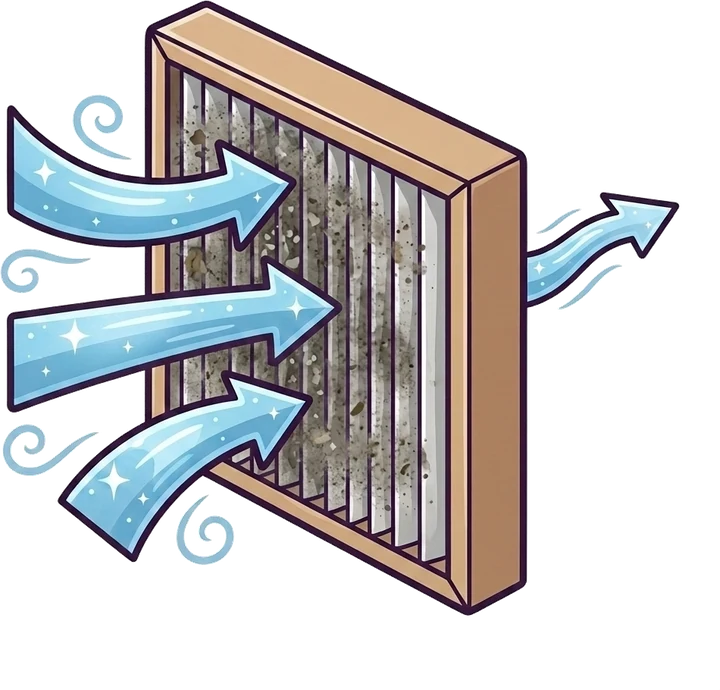
Pressure drop is the resistance air experiences moving through any single component in its path: the filter, the coil, a run of duct, a grille. Each one takes a toll, and the blower has to overcome the sum of all of them to deliver air to your rooms. Add up every pressure drop in the system and you get total static pressure, the number technicians use to judge how freely a system breathes.
Why pressure drop matters in South Florida
The classic local example is the filter upgrade that backfires. A homeowner swaps a basic filter for the densest allergy filter on the shelf, and the pressure drop across that filter doubles or triples. The blower now strains against it, airflow falls, the coil runs colder and wetter, and the system cools and dehumidifies worse than before, in the climate that punishes weak airflow hardest. Dirty coils and undersized R-22-era ducts stack their own pressure drops on top.
Signs of a pressure drop problem
- Airflow that weakened after a filter change.
- A whistling sound at the filter or return grille, which is air being forced through too small an opening.
- A blower that seems to roar while the vents barely deliver.
What Kyzar checks
Pressure drop is measurable, and measuring it is how you find the choke point instead of guessing at it. We read pressures across the filter and coil and through the duct system, then fix the actual restriction. Sometimes the answer is as simple as a better-matched filter; sometimes it is the duct evaluation that explains a decade of hot rooms.