
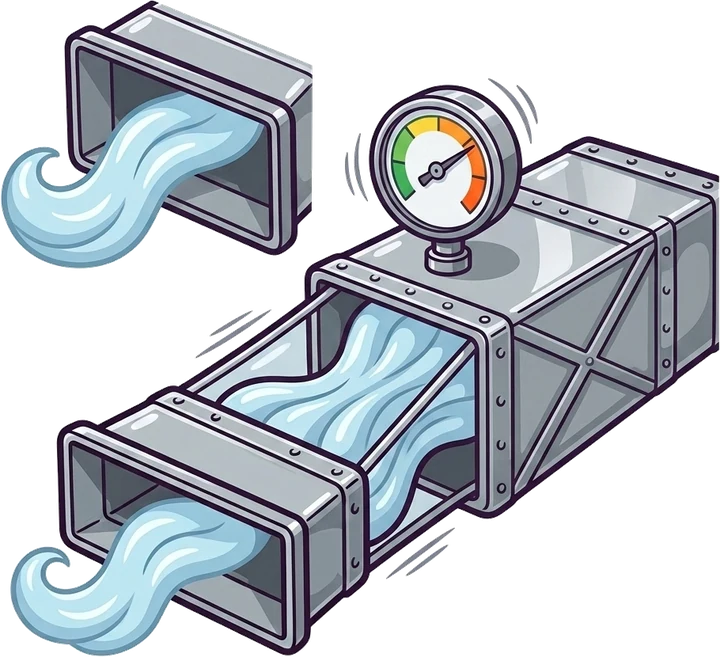
Static pressure is the total resistance the blower has to overcome to move air through the filter, coil, ducts, and grilles. Technicians measure it in inches of water column with pressure probes, and the comparison every homeowner intuitively gets is blood pressure: a healthy reading means air flows freely, while a high reading means the system is straining against a restriction somewhere.
Why static pressure matters in South Florida
High static pressure is the hidden reason so many Florida systems underperform. The R-22-era duct systems in most of our older housing stock were sized for different equipment, and modern systems attached to them run high static from day one. The consequences stack up quietly: less airflow, weaker cooling and dehumidification, a blower motor working overtime toward an early failure, and rooms at the end of the duct runs that never quite cool. The equipment gets blamed; the ductwork is usually the culprit.
Signs of high static pressure
- Weak airflow at distant vents, strong airflow near the air handler.
- A blower that sounds like it is roaring while delivering little.
- Whistling at returns and filters.
- Repeated blower motor failures over the years.
What Kyzar checks
Measuring static pressure takes minutes and turns a vague complaint into a number. It is a standard part of our duct evaluation and our replacement quotes, because dropping new equipment onto a high-static duct system guarantees the new system underdelivers. When the number is high, we trace which component is causing it and show you, so the fix targets the restriction instead of the symptom.