It is a hot Boynton Beach afternoon, the house keeps getting warmer, and when you step outside, the fan on top of the outdoor unit is not moving. If the unit is humming while that fan sits still, set the thermostat to Off before you read on. The section on the compressor explains why.
Carrier’s guide to an AC fan that won’t spin names four leading causes: a tripped circuit breaker, a bad capacitor, a burnt-out motor and a clogged air filter. Here is the order we suggest, and the point where your part ends and AC repair begins.
What Should You Check First When an Outdoor Fan Stops Spinning in Boynton Beach?
First, settle which fan has stopped. Trane’s guide to a fan that stopped spinning says most homes have a split system with two main fans: a blower inside that sends cooled air through the ducts, and a condenser fan outside that pulls hot air through the outdoor coils. Trane says the condenser fan is visible from the top of the outdoor unit. If that fan is operating normally, Trane says the problem may be the blower motor, especially if you feel low or no airflow from the vents, which is a different repair from this one.
Then listen for a moment. Carrier’s guide says that if the fan isn’t spinning and you don’t hear the compressor humming, the whole outdoor unit may not be getting power, or the compressor has failed. A hum with a still fan is the other case, covered next.
Either way, take these steps in order. The power goes off before you go near the unit, and no step opens it. If the unit was humming, do the first three and stop. If it was silent, do all five, but only if the look in step 3 finds nothing wrong: a cracked, loose or jammed blade stops you there, with the breaker left off.
- Set the thermostat to Off. The system stays off until the last step.
- Switch off the outdoor unit’s breaker. If you smell burning, skip to the section below on keeping the AC off. Otherwise, open just the door of the breaker box and leave the inner cover in place. Push the outdoor unit’s breaker fully off, even if it has not tripped. That starts your one reset: Bryant’s guide to a fan that won’t spin resets by turning the AC off at the thermostat and leaving the breaker off for a few minutes before the power goes back on.
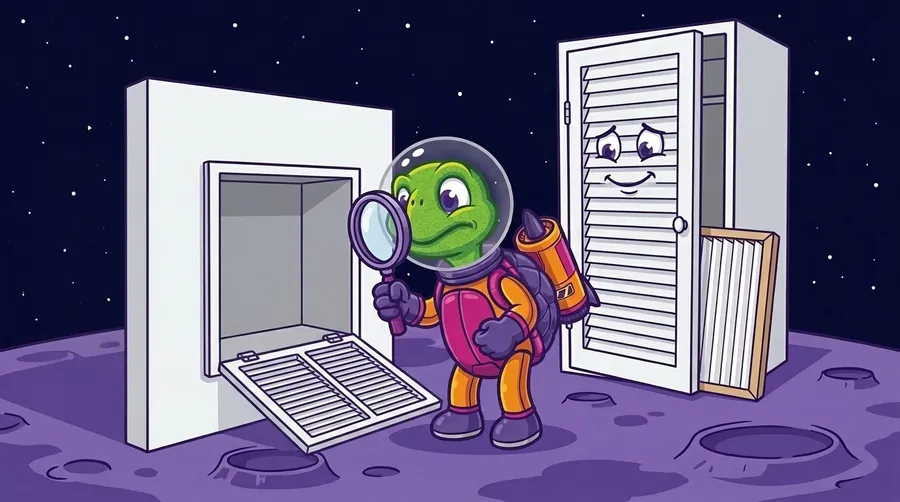
- Look down through the top grille without reaching in. Check for leaves, sticks, or a blade that is cracked, loose or jammed. Bryant’s guide says to clear debris from around the unit without reaching into the grille or touching the fan, and to keep the system off and contact a dealer if a blade is damaged or obstructed inside. So if a blade is cracked, loose or jammed, or the unit was humming, stop here and leave the breaker off.
- If the unit was silent, check the disconnect. Carrier’s guide says the disconnect box near the outdoor unit should be switched On. If its switch is on the outside of the box and sits at Off, switch it On. If you would have to open the box to see the switch, leave it closed and mention it when you call.
- If it was silent and no blade is cracked, loose or jammed, finish the reset. After those few minutes, switch the breaker on and set the thermostat to Cool. If you smell burning or see smoke, set the thermostat to Off at once and go straight to Lennox’s advice in the section below on keeping the AC off. Otherwise, if the fan does not turn, or the unit hums while the blade stays still, set the thermostat back to Off and switch the breaker off at once, then read on. If the breaker trips again, leave it off: Bryant’s guide says to reset a tripped breaker once and call for service if it trips again. If the fan turns and the breaker holds, the reset did its job.
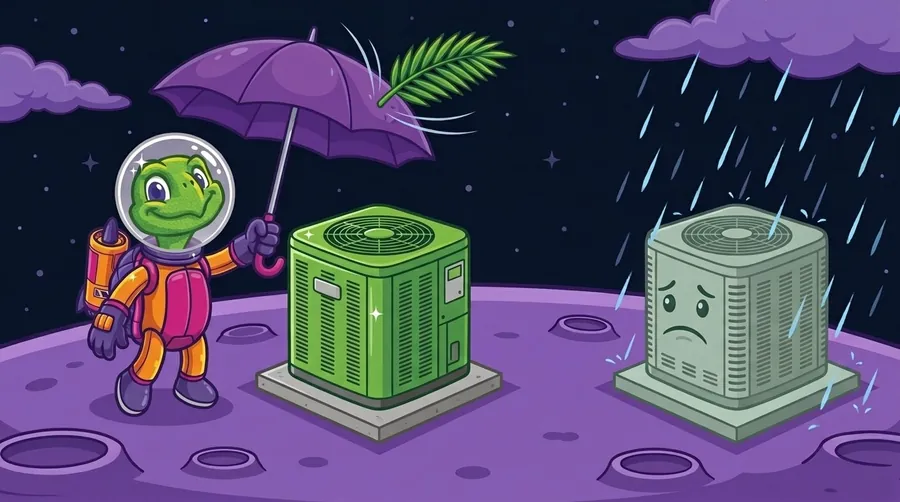
Bryant’s guide names power surges and electrical storms, along with an overworked system, among the things that can trip the breaker and cut power to the outdoor unit. Wind is the other risk: a California HVAC company’s troubleshooting video describes a windstorm that knocked branches into the top of an outdoor unit, where a stick wedged itself in and caused the fan motor to burn out. After a windy storm, the look in step 3 is worth the minute.
If nothing runs at all, indoors or out, the indoor switch, the rest of the power path and a clogged filter are covered in our guide to why an AC won’t turn on, and a dark or wrongly set thermostat in our Port St. Lucie thermostat guide. A breaker that trips a second time has a diagnosis of its own, in our guide to an AC that keeps tripping the breaker.
What Does It Mean if a Condenser Fan in Boynton Beach Still Hums but Won’t Spin?
It can mean the motor has power but cannot start. Carrier’s answer to this exact question is that the fan motor may be receiving power but unable to start, often because of a failed capacitor or a failing motor. Elsewhere in the same guide, Carrier is blunter: if the fan is not spinning but is making a humming noise, the capacitor has likely failed.
The sound alone does not settle which part it is, which is why the next step is a technician’s tests, not a parts order. It is also the moment people reach for a stick, which a later section answers. Whatever the cause, do not let it keep humming: if you followed the steps above, the thermostat and the breaker are off already, and the compressor section below explains why they should stay off.
Is a Failed Capacitor Why a Boynton Beach Fan Motor Won’t Start?
Often, yes. Bryant’s fan guide calls a failing run capacitor one of the most common reasons an AC fan is not spinning, and says the capacitor stores electrical energy and helps provide the starting and running support the fan motor needs. When it weakens, the motor can have power and still lack the boost it needs to start, which is the hum from the last section.
Heat and long hours are hard on them. Lennox’s guide to AC capacitors says the constant demand on most capacitors, especially in extreme weather zones, is why they fail more often than other components, and calls capacitor failure one of the most common reasons an air conditioner breaks down, especially during the heat of summer.
That makes the capacitor a technician’s part. Carrier’s fan guide warns that capacitors hold a high-voltage charge even when the power is off, and that only a trained AC service technician should handle them.
A technician also tests in order. Bryant’s troubleshooting sequence for a fan that won’t spin runs power, capacitor, contactor, motor, then airflow, and it keeps electrical and refrigerant repairs in the hands of a qualified professional. Your share is the breaker and disconnect checks above; the testing after them belongs to the technician.
Does a Seizing Fan Motor Give Any Warning Before It Quits?
Sometimes, if someone is watching. Bryant’s fan guide says that over time a fan motor’s bearings can wear out, or the motor can overheat and fail, and that a failing motor may make grinding and screeching noises before stopping completely. Its other warning signs can include a fan that runs slowly, one that starts and stops intermittently, and a buzzing sound.
Those noises, and whether a worn bearing is an emergency, are sorted out in our Jupiter guide to what a loud AC noise is telling you.
The quiet signs slip by, because the outdoor unit is easy to ignore: a fan that turns slower than it used to, or stops and restarts on its own, can go unnoticed until the day it stays stopped. Any of them is worth a call before the fan quits on a hot afternoon.
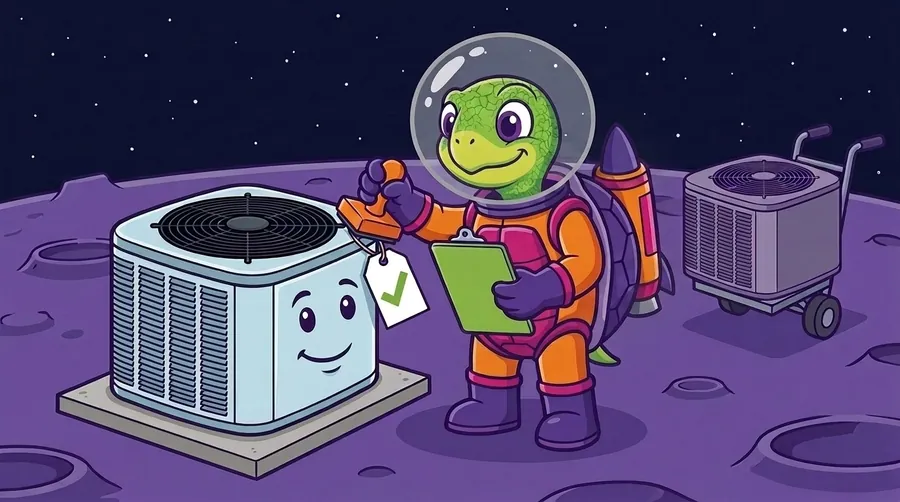
A maintenance visit is the place to catch them early. ENERGY STAR’s maintenance checklist says a typical contractor check-up should include measuring voltage and current on motors and checking the starting cycle of the equipment, to make sure the system starts, operates and shuts off properly.
How Long Can the Compressor Run With a Stopped Fan in a Boynton Beach Home?
Not long enough to plan around. Neither Carrier’s fan guide nor Bryant’s gives any running time as acceptable, and both answer the question with the same instruction: turn the AC off immediately.
The reason is heat. Bryant’s guide says the condenser fan moves air across the condenser coil so the system can release heat outdoors, and that if the fan stops working, the compressor can overheat, potentially causing more damage to the system.
On a hot Boynton Beach afternoon, turning the AC off while the house warms up feels backward. It is still the right call, because the compressor is the part you least want to damage. If the compressor was running while the fan sat still, Carrier’s guide says to turn the AC off at the thermostat and at the circuit breaker, then contact a qualified HVAC professional. With the breaker off, the system cannot start again on its own while you wait.
Should Boynton Beach Homeowners Ever Push a Stalled Fan Blade to Get It Started?
No, not with a stick and not by hand, even though the stick version is a popular trick in online repair videos and it sometimes works. Bryant’s fan guide says that nudging the blade with a long stick can sometimes start a fan with a bad capacitor temporarily. It still calls the trick highly discouraged and dangerous, and says it does not fix the underlying problem. It also warns that the trick can lead to the motor burning out entirely.
What the push gives you is a clue, not a fix. Carrier’s FAQ says that if a fan can be jump-started with a stick, the capacitor is often the cause. That is useful to a technician, who can confirm it with a meter. As a stopgap it does not last, because the push does nothing for the capacitor: the next time the thermostat calls for cooling, the compressor can start while the fan sits still, with nobody outside to notice.
Our answer: leave the blade alone, keep the system off, and let a technician confirm whether it is the capacitor or the motor.
When Is a Stopped Fan a Signal to Keep the AC Off at Your Boynton Beach Home?
Whenever the fan will not turn and the rest of the outdoor unit is trying to run. Bryant’s fan guide lists the cases that call for contacting a dealer immediately. Treat each of them as a reason to leave the system off until it has been checked:
- The outdoor fan is not spinning while the system keeps trying to cool.
- You suspect a failed capacitor, contactor or motor.
- The system repeatedly trips the circuit breaker.
- It makes loud grinding, screeching or buzzing noises.
- Ice is building up on the refrigerant lines or the indoor coil.
Ice is a fault of its own, with its own causes and steps, in our Boca Raton guide to an AC that keeps freezing up. Add a damaged or blocked blade from your look through the grille.
A burning smell is more urgent than any of these. Lennox’s guide to AC capacitors says a burning smell can indicate melted or burning wires within a failing motor or another component overcome with heat, and that if the smell doesn’t go away or you see smoke, you should turn the unit off immediately and call 911.
Once it is off, book AC repair in Boynton Beach and tell the technician what you saw and heard: a hum or silence, what the breaker did, and anything in the grille.
Key Takeaways
- First settle which fan stopped: the condenser fan is visible from the top of the outdoor unit.
- With the thermostat and the outdoor breaker off, look through the top grille without reaching in.
- A silent outdoor unit may not be getting power: if the look through the grille found nothing wrong, check the disconnect, then finish one breaker reset. A cracked, loose or jammed blade keeps the breaker off, and a second trip ends the checking.
- A hum with a still fan can mean the motor has power but cannot start, and Carrier says the capacitor has likely failed.
- Capacitors hold a high-voltage charge even with the power off, so the capacitor is a technician’s part.
- Carrier and Bryant both say to turn the AC off immediately when the outdoor fan is not spinning. Bryant calls the stick trick highly discouraged and dangerous.
If the fan still won’t spin, book a visit online and keep the system off until the technician arrives. Licensed and insured, CAC1822395.