There is a particular kind of quiet that tells you something is wrong. You push the thermostat down, wait for that familiar click and hum, and nothing happens. No air. No noise outside. Just a house already past 80 and a growing suspicion this will be expensive.
Take a breath, because it often is not. A meaningful share of the no-start calls we run turn out to be a switch someone bumped, a breaker that quietly tripped, or a part that costs very little to replace. Some you can sort out yourself in ten minutes. Others genuinely need a meter and a licensed tech, and we will be straight with you about which is which, because that honesty is why people call us for AC repair in West Palm Beach rather than the outfit with the loudest radio ad.
Here is how to work through it, roughly in the order a good tech would.
What Should You Check First When Your AC Won’t Turn On in West Palm Beach?
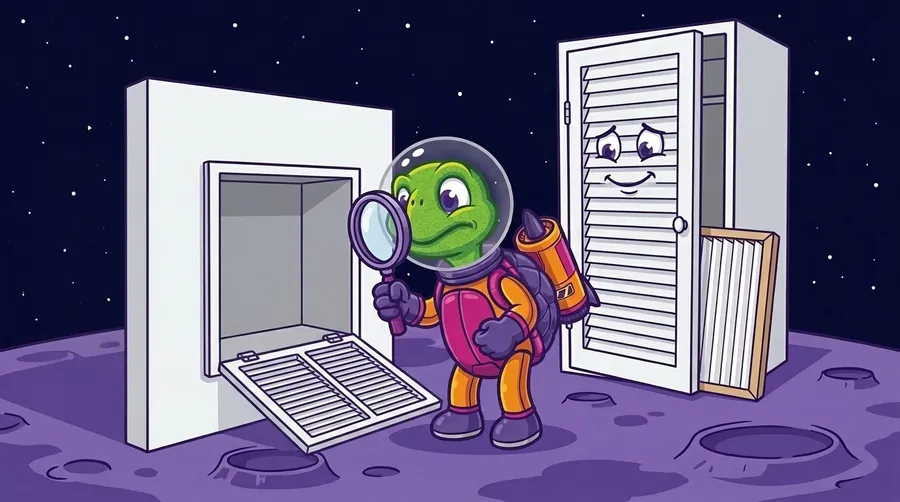
Start with power, not with panic. An air conditioner has more on and off switches than most homeowners realize, and any one of them leaves you with a dead system that looks catastrophic. Walk this list before anything else:
- The thermostat itself. Is the display lit, set to cool, with the target at least a few degrees below the current room reading?
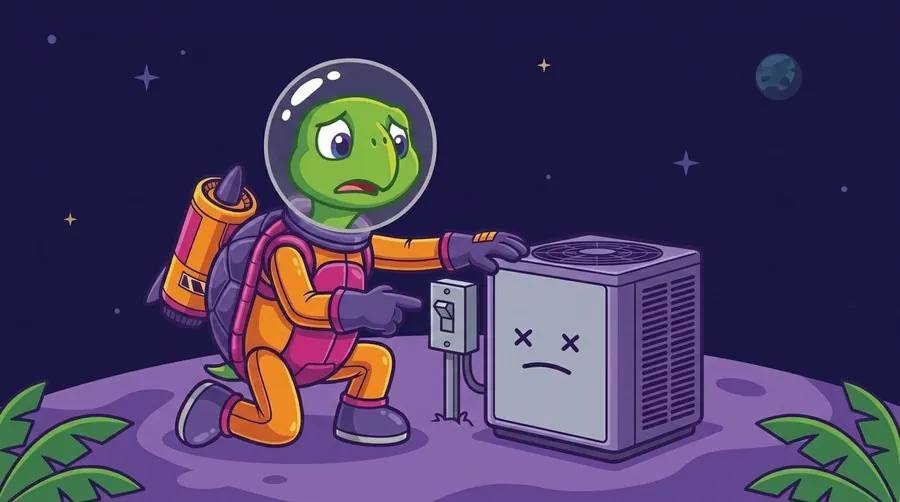
- The indoor switch. Near your air handler, usually in a closet, garage, or attic, sits a plain switch that looks exactly like a light switch. It gets flipped during attic work, holiday decorating, or by someone assuming it was a forgotten closet light.
- The outdoor disconnect. Beside the condenser is a small box with a pull-out block or lever. If it has been pulled, the outdoor unit gets nothing.
- The breaker panel. Look for the AC breaker sitting in the middle position rather than fully on.
That indoor switch deserves its reputation. In one widely read homeowner thread about a dead AC, the top answer by a wide margin was simply that a switch next to the unit needed turning on.
Is a Tripped Breaker or Blown Fuse Why Your West Palm Beach AC Won’t Start?
Very often, yes. This is the most-cited cause on nearly every troubleshooting resource, and for good reason.
Two things confuse people. First, a tripped breaker does not always look tripped: it can rest in a middle position that reads as “on” at a glance. Push it firmly all the way to off, then back to on. A half-hearted nudge accomplishes nothing. Second, most systems have more than one point of protection. There is the breaker in your panel, usually a second disconnect at the condenser, and a small low-voltage fuse on the air handler’s control board that you can pull, with the power off at the breaker first, and hold up to the light to check for a dark scorch mark across the middle.
That fuse matters more here than up north. Our afternoon storms, and the outages and restoration surges that come with them, are a common way one goes, and we have seen plenty of systems that were running fine, lost power for under a minute, and never came back. If your no-start began right after a storm or a flicker, that fuse is a strong suspect. Our hurricane season AC prep guide covers protecting a system through the season.
One boundary matters: if a breaker trips again immediately after you reset it, stop. The Electrical Safety Foundation International lists frequent breaker tripping among the warning signs of an overloaded electrical system, and forcing it back on repeatedly does nothing about whatever is pulling that current. It is a real fire and shock risk rather than a fix. That pattern is its own diagnosis and deserves a separate conversation with a tech.
Is Your Thermostat the Reason the AC Isn’t Turning On in West Palm Beach?
A thermostat is really just a switch that tells the rest of the system when to run. When it stops passing that signal along, everything downstream looks broken while being perfectly healthy.
Check the obvious first. Dead batteries blank the screen entirely, though a blank screen can also mean that low-voltage fuse, so the two symptoms overlap. If the display is lit but nothing responds, confirm it is set to cool rather than fan-only, and that the setpoint is genuinely below room temperature. A system will sit silent all afternoon if you asked it for 78 in a 77 degree house.
Smart thermostats add a wrinkle: after a power interruption some come back in a hold state or lose their schedule, so walk the settings from scratch. What you should not do is pull wires off the terminals to test theories you read online, because those connections are easy to mix up and the misfires are harder to chase than the original problem.
Can a Dirty Filter Stop Your West Palm Beach AC From Turning On?
Not usually on its own, but it sets up the failure that does.
A filter packed with dust starves the system of airflow. Less air moves across the indoor coil, the coil runs colder than it should, and eventually it can freeze into a block of ice. Once that happens the system either struggles badly or shuts down on a safety, and to you it reads as an AC that will not run. The U.S. Department of Energy lists a dirty filter among the most common air conditioner problems, and it is the cheapest thing on this page to rule out. Pull yours: if it is gray and matted, replace it before anything else.
Filters load up faster here than the printed interval suggests, since year-round runtime, construction dust, pets, and coastal grit make the every-three-months guidance optimistic for a West Palm Beach home. And if your system runs and blows but the air is simply not cold, that is a different problem with a different fix, covered in our guide to a system that runs but never cools.
Can a Tripped Float Switch Be Why Your West Palm Beach AC Won’t Turn On?
This is the cause the national troubleshooting articles tend to skip, and in our climate it might be the most common one on the whole list.
Your system pulls an extraordinary amount of moisture out of South Florida air, and all of it drains through a condensate line. When that line clogs with the algae and biofilm that thrive in our humidity, water backs up into the drain pan. A float switch rises with it and cuts the low-voltage signal, shutting the system down on purpose before the overflow reaches your ceiling. So it is not broken. It stopped itself to prevent water damage, and it will not restart until the water drops and the switch resets.
From inside the house this is total silence, with no error and no warning, so homeowners assume the worst. It is telling that when people post online about a dead AC, a clogged drain breaking the low-voltage circuit is one of the first things working techs tell them to check, even though the manufacturer troubleshooting pages rarely lead with it. If you find standing water in the pan, that is your answer, and clearing the line is routine AC maintenance rather than a major repair.
Which Electrical Parts Keep an Air Conditioner From Starting in West Palm Beach?
Once power, thermostat, airflow, and the float switch are ruled out, you are into the components that actually make the outdoor unit spin. Three come up constantly.
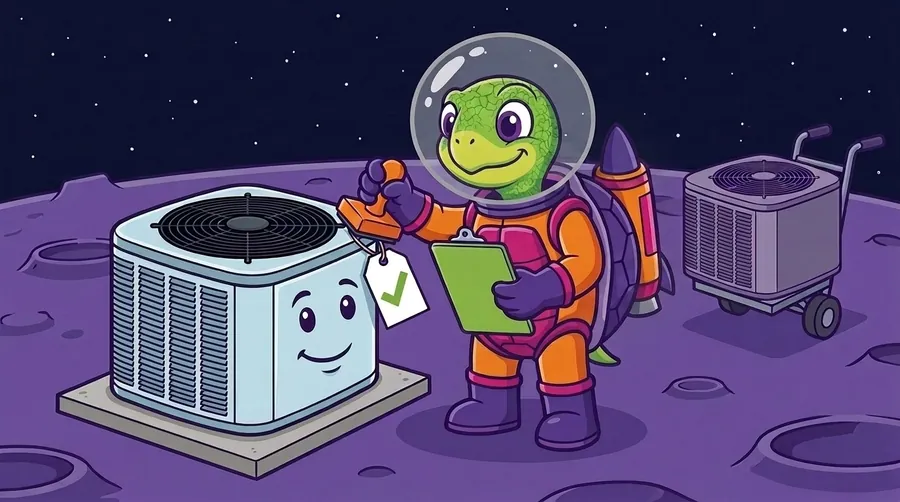
The capacitor delivers the jolt that gets the motors moving. When it weakens, you get a unit that hums but will not start, or one that runs fine in the morning and drops out under a hot afternoon load. The contactor is the heavy-duty relay that lets high voltage through when the thermostat calls, and its contacts pit and corrode over time. A telling sign is an outdoor unit that only runs if someone physically presses the contactor in. The transformer produces the low-voltage control power everything else depends on, and when it fails nothing responds at all.
All three take a meter to diagnose honestly, and two sit inches from line voltage that stays dangerous with the thermostat off. This is where investigation should become a phone call.
Why Do So Many West Palm Beach AC No-Starts Trace Back to One Cheap Part?
Because the capacitor is a genuinely inexpensive component that fails constantly, especially in a climate where systems run most of the year and heat is what wears capacitors out.
That cuts two ways, and you deserve both edges. The good edge: a dead-silent, apparently catastrophic AC very often comes back to life with a modest part and a short visit, so before you brace for a system replacement, know that the likeliest single culprit is small.
The sharp edge: because the part is cheap and the symptom is dramatic, it is also a well-known pressure point. There is a reason “the AC capacitor scam” has hundreds of thousands of views behind it on YouTube. The failure mode is not usually a fabricated repair. It is a tech who swaps the cheap part, never investigates why it died, and leaves. Capacitors fail from age and heat, but they also fail early because a motor is drawing too much current or a condenser is so choked with dirt the system runs hot. Replace only the capacitor and you will make the same call next season.
The mirror-image mistake is worth naming too. Homeowners read that capacitors and contactors are common failures, order both, and swap them without testing anything. One did exactly that and still had a dead outdoor unit, with photos showing a capacitor left loose and upside down beside high-voltage lugs in rough shape. He spent money, gained nothing, and created a hazard on the way.
Testing first is not upselling. It is the cheaper path, and it is why our techs diagnose before quoting rather than the other way round.
Can You Reset Your AC Yourself, or Does It Need a West Palm Beach Pro?
Here is the honest dividing line.
Reasonable to do yourself: correct thermostat settings and batteries, find and flip the indoor switch, confirm the outdoor disconnect is seated, reset a breaker once, replace a filthy filter, check the drain pan for standing water, clear debris away from the outdoor unit, and, with the power off at the breaker, check the air handler’s low-voltage fuse for a scorch mark.
Worth a call: a breaker that trips again right after resetting, a unit that hums without starting, any burning smell or visible scorching, a system that only runs when you press on the contactor, standing water that returns after you clear it, and anything requiring you to open the electrical compartment on the condenser.
That last one is not us being precious. Capacitors hold a charge after the power is cut, and those connections are unforgiving of a wrong touch.
Timing matters too. An indoor temperature climbing through the 80s is a real problem for infants, older adults, and anyone with a heart or respiratory condition, and not something to wait out over a July weekend. If you are past the easy checks, book a visit rather than spending the evening with a multimeter you bought that afternoon. We run techs across the West Palm Beach area and can usually reach a no-cooling call the same day.
How Do You Keep Your AC From Dying Again in West Palm Beach Heat?
Most no-starts are the visible end of something building for months. A few habits carry most of the weight:
- Change filters on the schedule your house needs, not the one on the box. Check monthly through the hottest stretch.
- Keep the condensate line clear. This is the difference between a float switch that never trips and a system that shuts itself off in August.
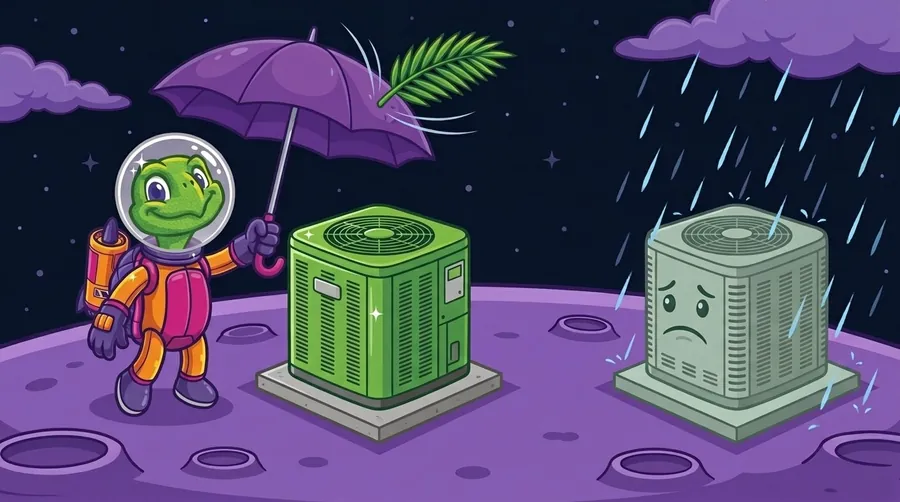
- Give the outdoor unit room to breathe. Keep hedges trimmed back and rinse the coil clear of clippings and salt film. ENERGY STAR includes coil and filter upkeep in its maintenance checklist for this reason.
- Have the electrical components tested before peak season. A capacitor drifting out of spec is measurable long before it strands you, and catching it in April is very different from finding it in July.
The pattern is simple. Systems that get looked at once a year fail on a schedule someone chose. Systems that do not fail on the hottest afternoon of the year, usually on a Friday.
The Bottom Line on an AC That Won’t Turn On in West Palm Beach
A dead AC feels like the worst possible news and usually is not. Work the list in order: thermostat, indoor switch, outdoor disconnect, breaker, filter, drain pan. Those six checks resolve a large share of no-starts and cost nothing but a little time. If you get through them and the system is still silent, you have not wasted an hour. You have narrowed it to the electrical side, where a meter and a licensed tech are the right tools, and where the likeliest answer is still a small part rather than a new system.
What you should expect from whoever comes out is a diagnosis before a price, an explanation of why the failed part failed, and a straight answer about repair versus replacement at any age of equipment. That is a fair thing to ask of anyone you let into your home. When you are ready, schedule a visit and we will tell you honestly what we find.